Cuba is a country that rewards curiosity. From the first morning in Havana, there is an extraordinary amount of life happening in public: conversations through open windows, families sitting in doorways, music drifting into the street, children playing and neighbours stopping to talk. For a documentary photographer, the challenge isn’t finding something to photograph. It’s slowing down enough to recognise the moments that matter.
Over two weeks we travelled across Cuba by car, beginning with the streets of Old Havana before heading west to the tobacco-growing valleys of Viñales, then travelling east through Cienfuegos and Trinidad, before eventually returning to Havana and the Malecón.
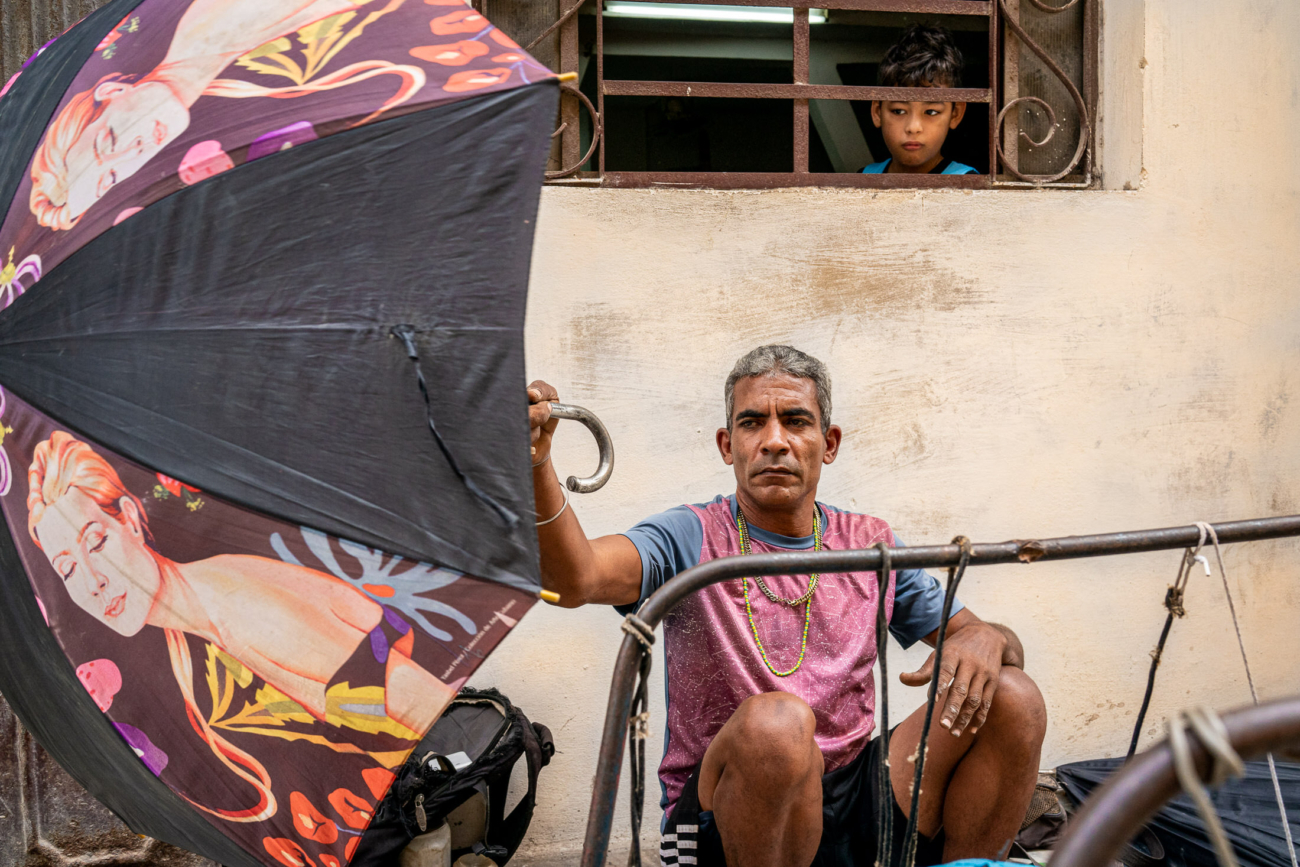
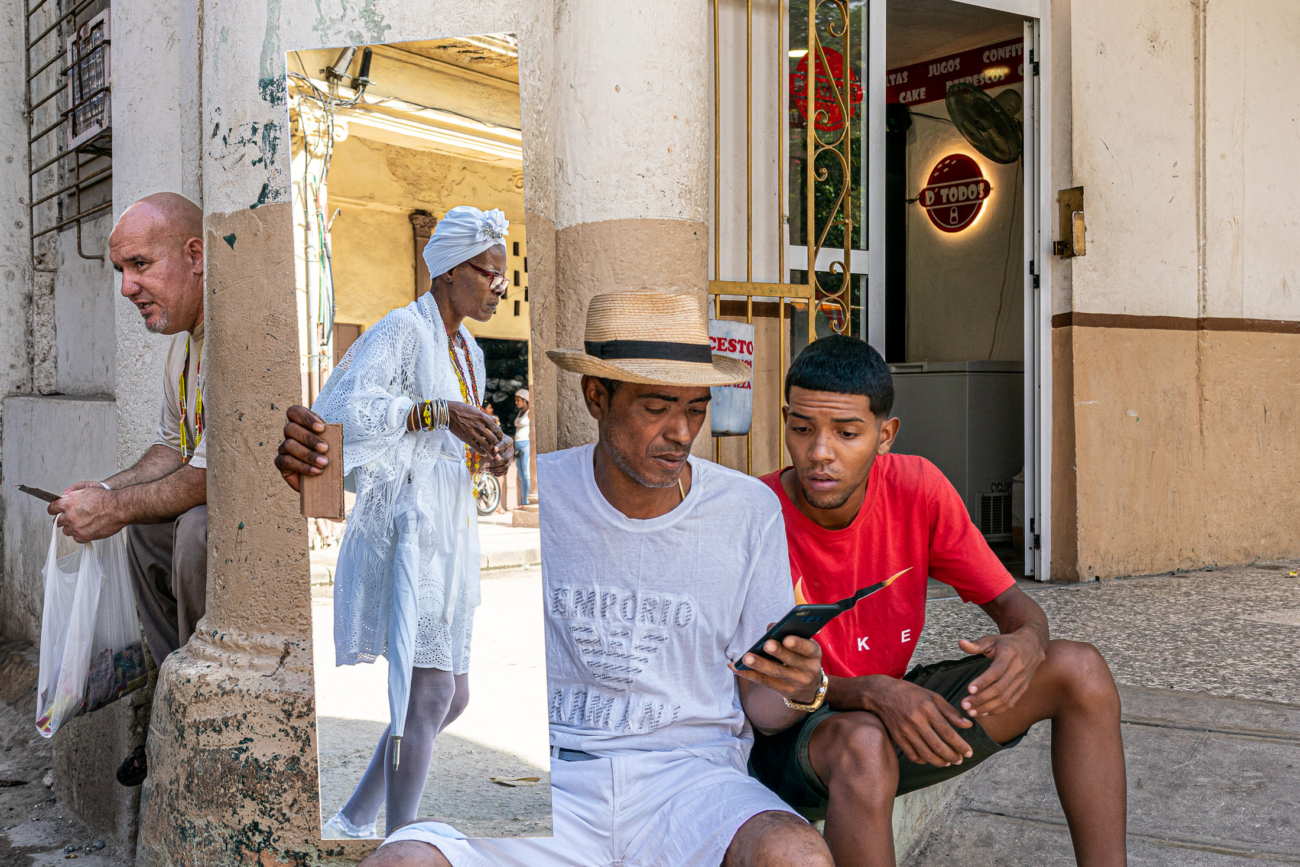
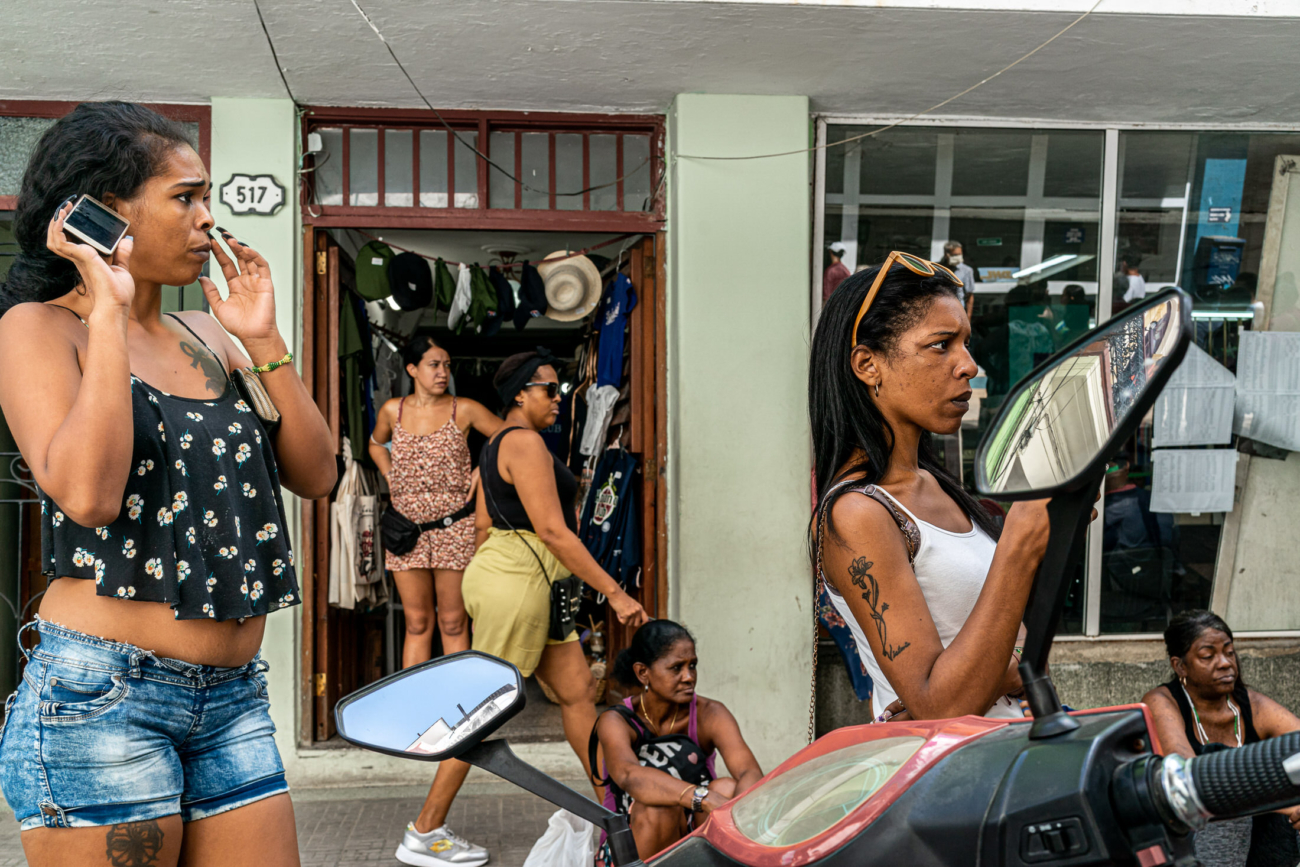
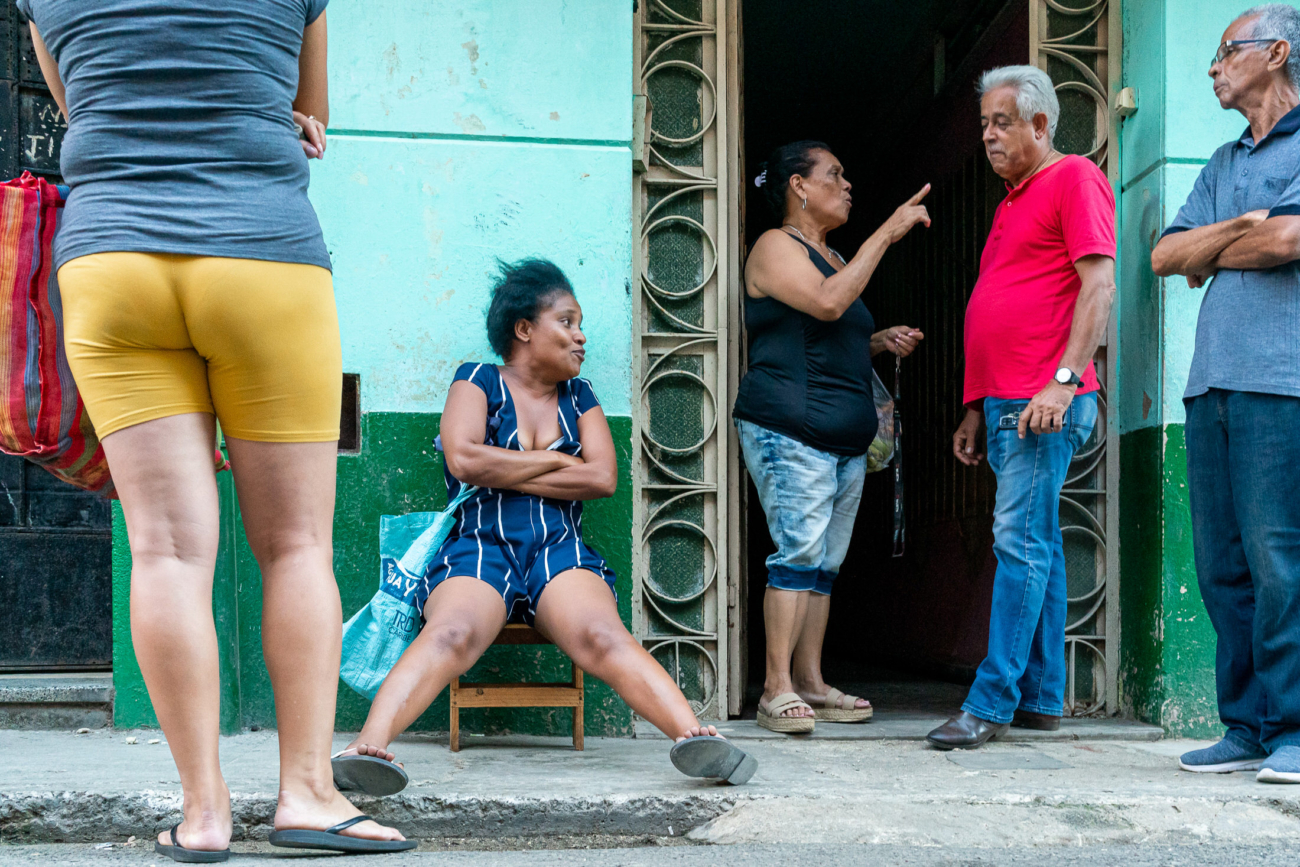
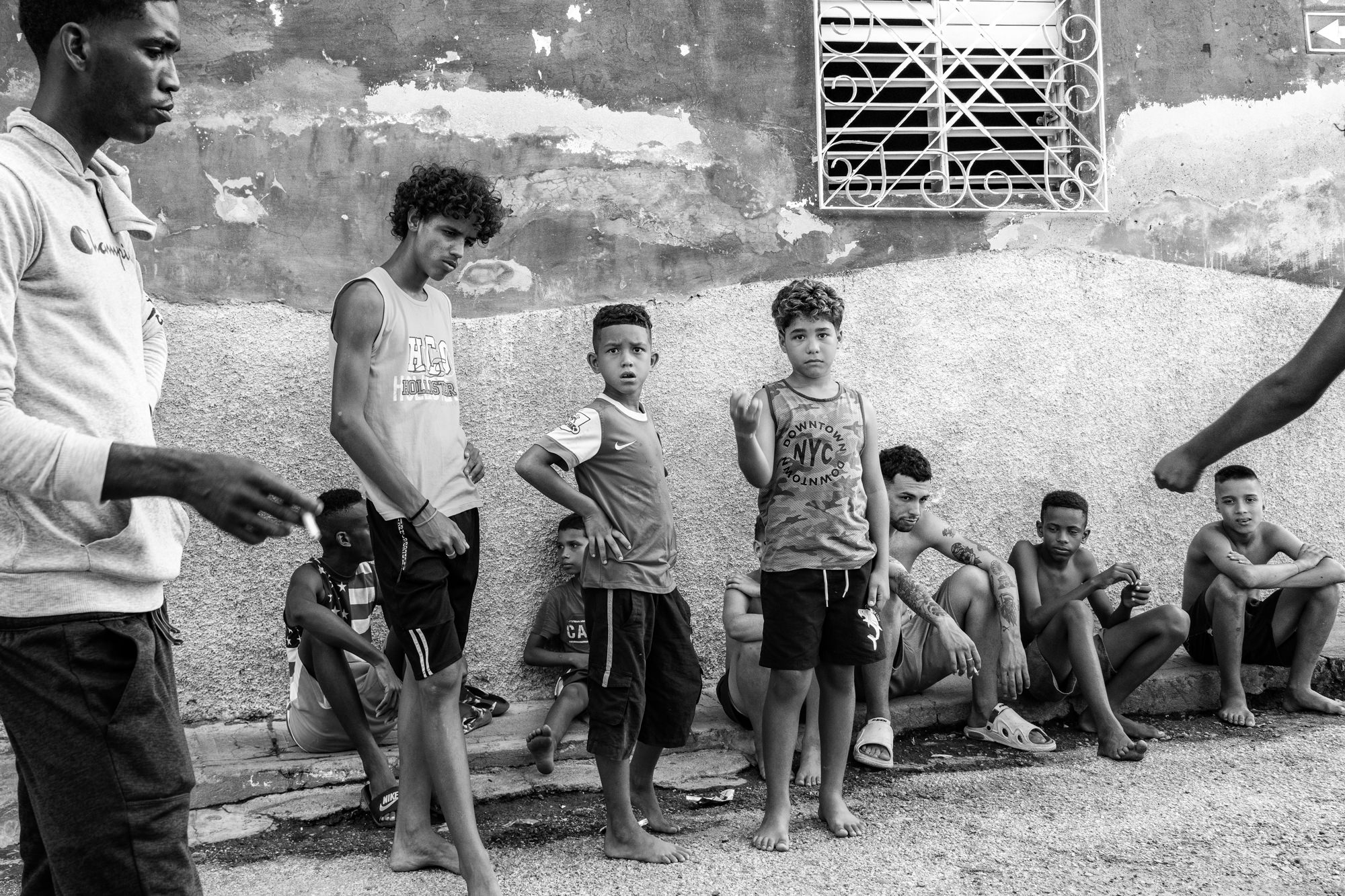
Each place revealed a very different side of Cuba. Havana street photography is about learning to make sense of constant movement. The streets are busy, layered and wonderfully unpredictable, but behind the obvious colour and energy are quieter photographs: gestures between neighbours, conversations in doorways and the small routines of everyday life.
Viñales offered something entirely different. Life moved more slowly. Early mornings brought mist across the tobacco fields, farmers working the red earth and families beginning their day. It was a reminder that photographing Cuba isn’t simply about its cities. Some of the most interesting stories lie within the rural communities between them.
Cienfuegos and Trinidad changed the rhythm again. We photographed in streets, homes, workshops and public spaces, spending time observing rather than constantly moving in search of the next photograph. The more time we gave a place, the more it began to reveal.
And then there were the journeys themselves. Travelling by road gave us the freedom to stop when something caught our attention: a roadside fruit stall, a small village, people gathered outside a house or simply an unexpected moment unfolding beside the road. Many of my favourite photographs from Cuba were made because we had no reason to hurry.
That unpredictability is what makes Cuba street photography so compelling. You can plan where you travel and where you begin each day, but you cannot plan the photographs. They come from being present, watching carefully and being open to the people you meet along the way.
Eventually we returned to Havana, where the journey had begun. Standing on the Malecón as the light disappeared across the water, I found myself thinking less about individual photographs and more about the experience of making them.
Cuba had reminded me of something very simple: the best travel and documentary photography often begins when you stop looking for photographs and start paying attention to life.
Here is what we discovered along the way.
Cuba Street Photography in Havana – The Heartbeat of Cuba
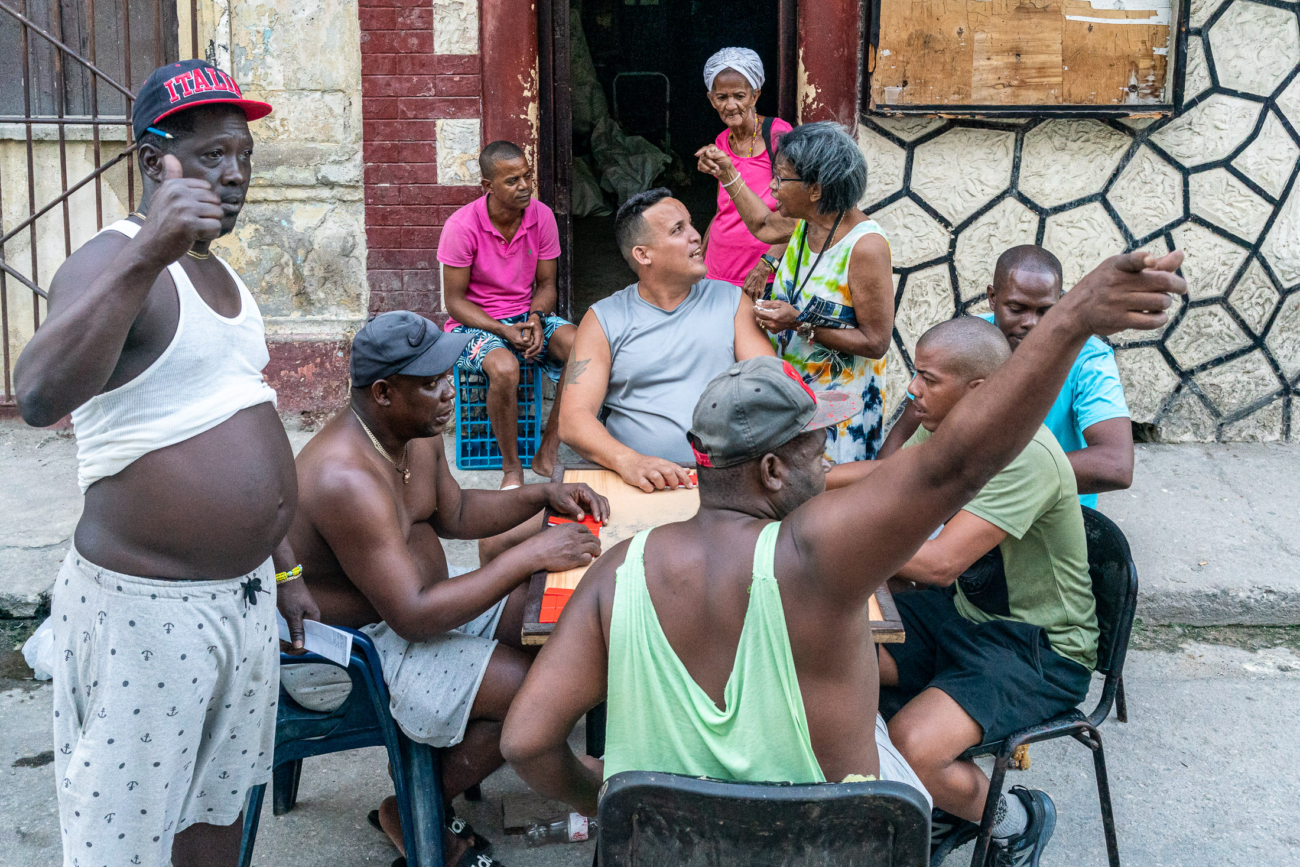
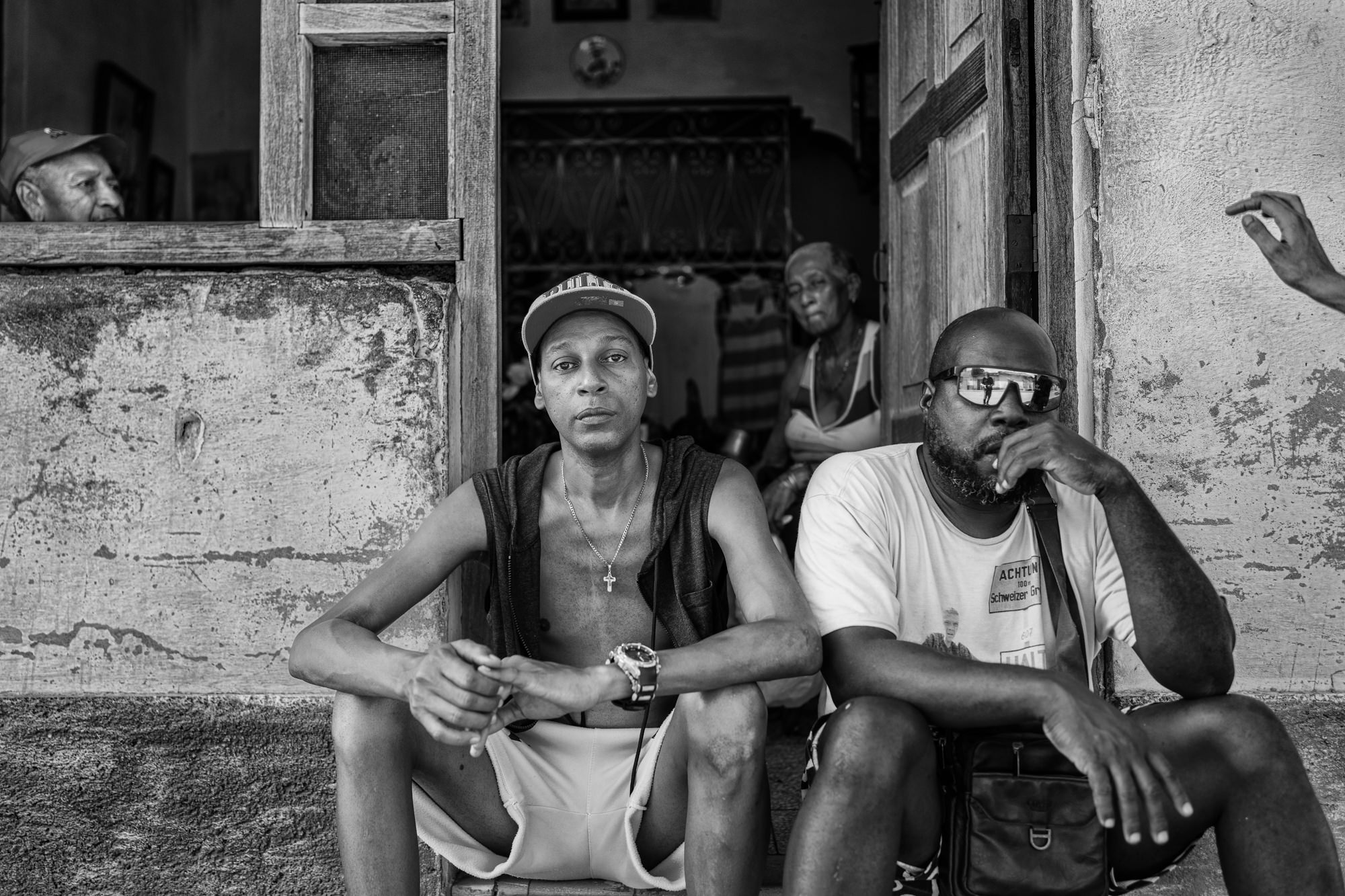
There’s nowhere quite like Havana. From the moment you step into the street, the city seems to be in constant motion. Conversations spill from doorways, music drifts through open windows, old American cars negotiate narrow streets and everyday life unfolds almost entirely in public.
For a documentary and street photographer, Havana can initially feel overwhelming. There is so much happening that the temptation is to photograph everything. But, as I have discovered over repeated visits, Havana street photography becomes far more rewarding when you stop moving, choose a place and simply watch.
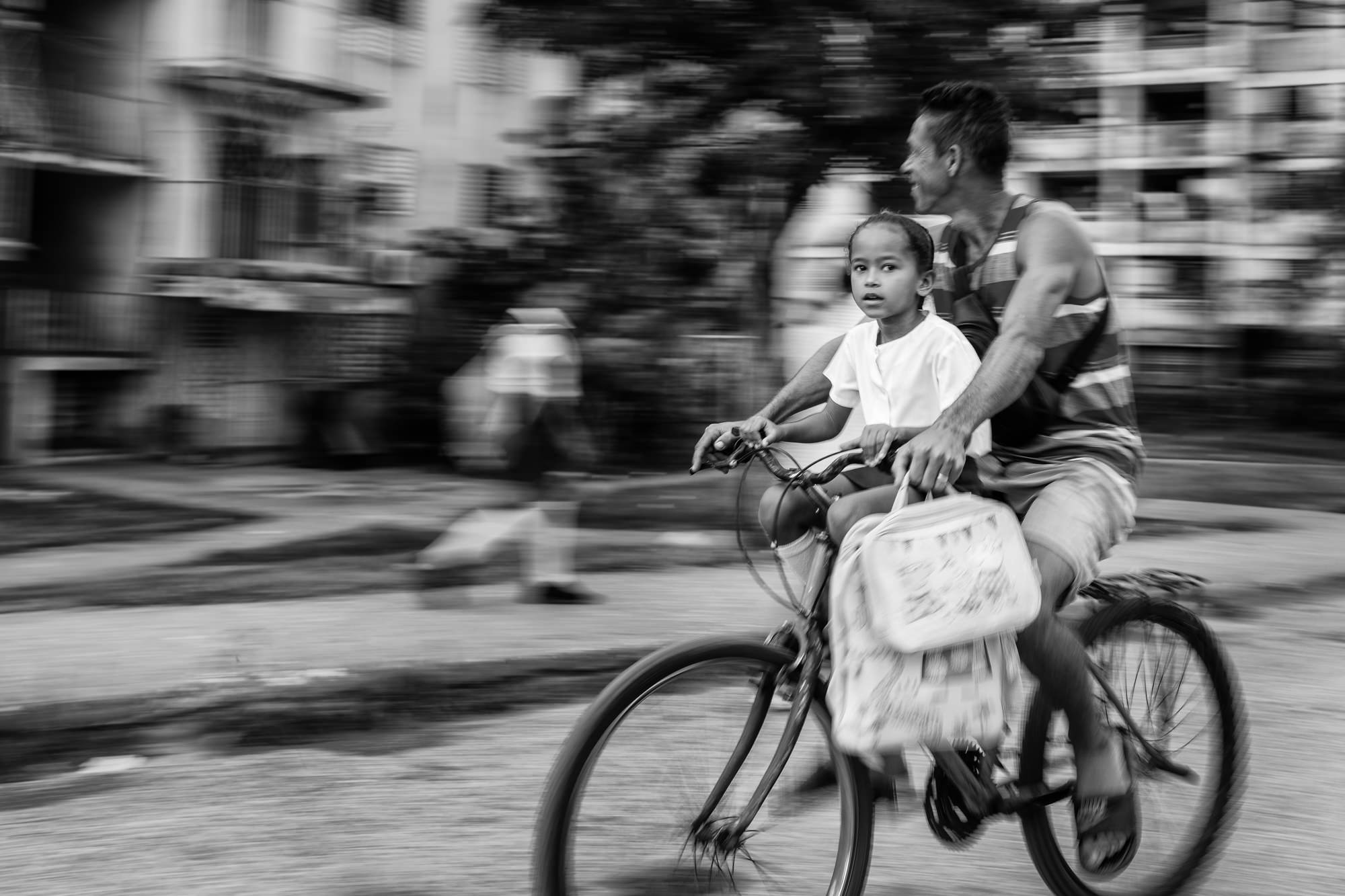
We spent several days exploring the city this way, allowing different neighbourhoods to reveal themselves gradually. Around Lagunas and through Vedado, the rhythm changes. Mornings can be quieter: neighbours talking from doorways, children making their way to school, people beginning work and the early light falling across Havana’s faded façades.
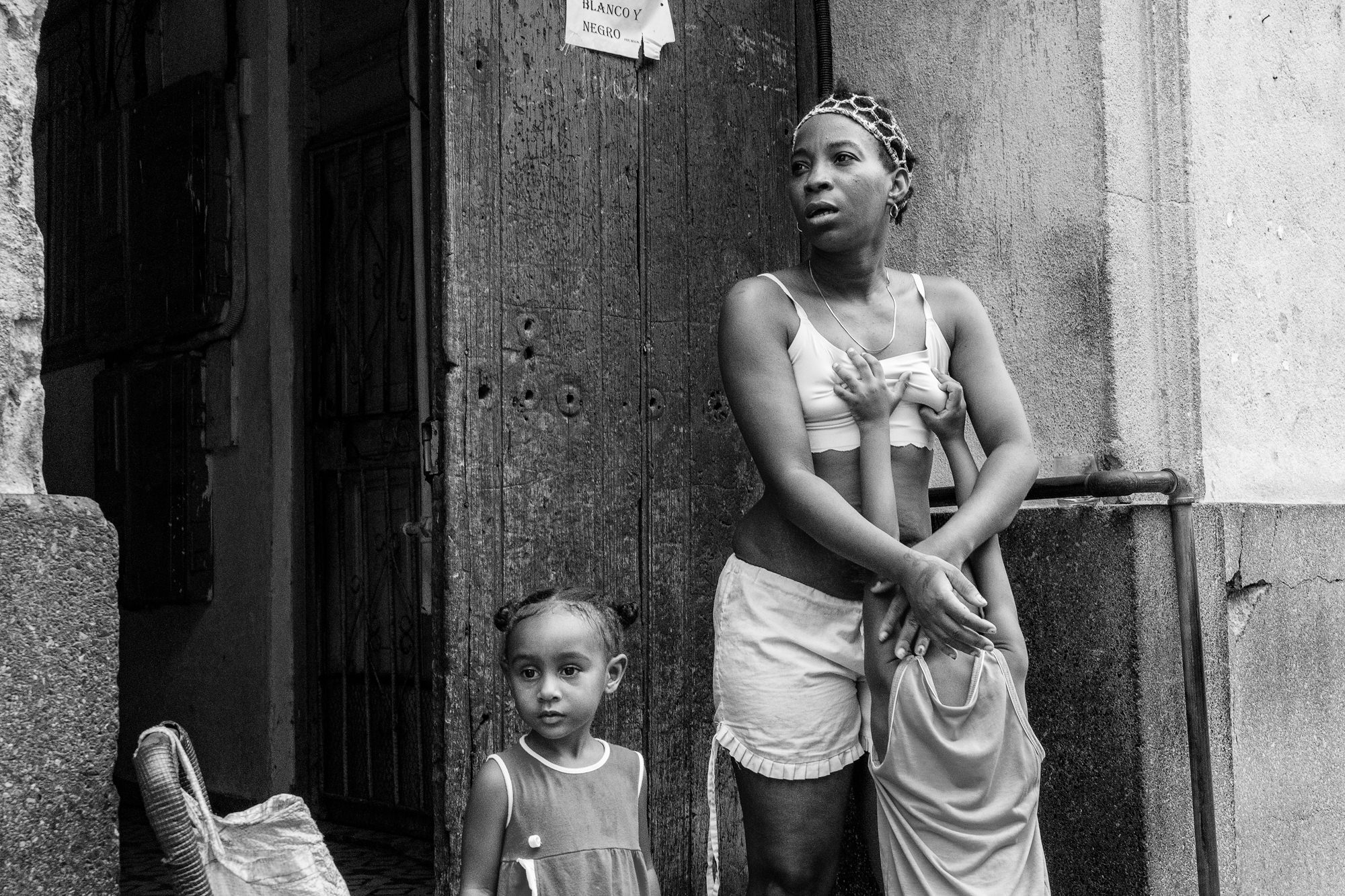
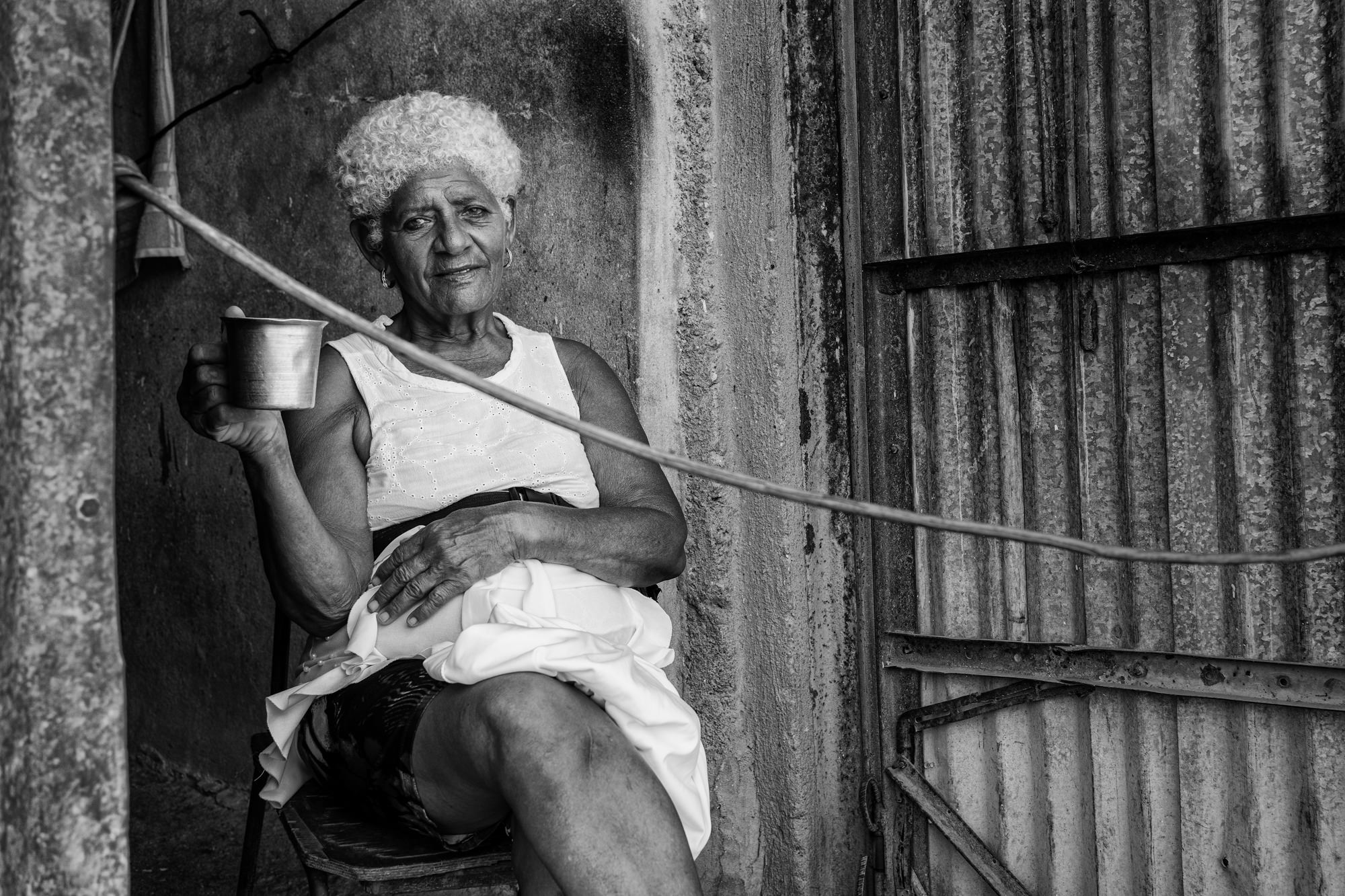
These are often the moments I’m looking for. Not necessarily the obvious spectacle of Cuba, but the smaller gestures and relationships that tell us something about everyday life.
For me, photographing Havana is about learning to see beyond the things the city is famous for. The cars, colour and architecture are certainly part of its visual identity, but the photographs that stay with me are usually about people: how they inhabit the streets, how they interact with one another and the brief moments that appear when you give yourself enough time to notice them.
Beyond Havana’s Streets
The Rafael Trejo Boxing Gym offers a very different side of Havana. Tucked between residential streets in Habana Vieja, the open-air gym has been part of the city’s boxing culture for decades. Training takes place in remarkably simple surroundings, with the sound of gloves hitting bags and shafts of sunlight cutting through the structure above.
For a documentary photographer, what interests me isn’t simply the boxing. It’s everything happening around it: the concentration before a round, the relationship between trainer and boxer, people waiting at the edge of the ring and those quieter moments between bursts of activity. Spend time there and it becomes less about photographing a sport and more about photographing the people and culture surrounding it.
A different rhythm can be found at Callejón de Hamel, known for its murals, sculpture, music and connection with Havana’s Afro-Cuban culture. The alley itself has become a well-known destination and can be busy with visitors, but I often find the surrounding streets more interesting photographically.
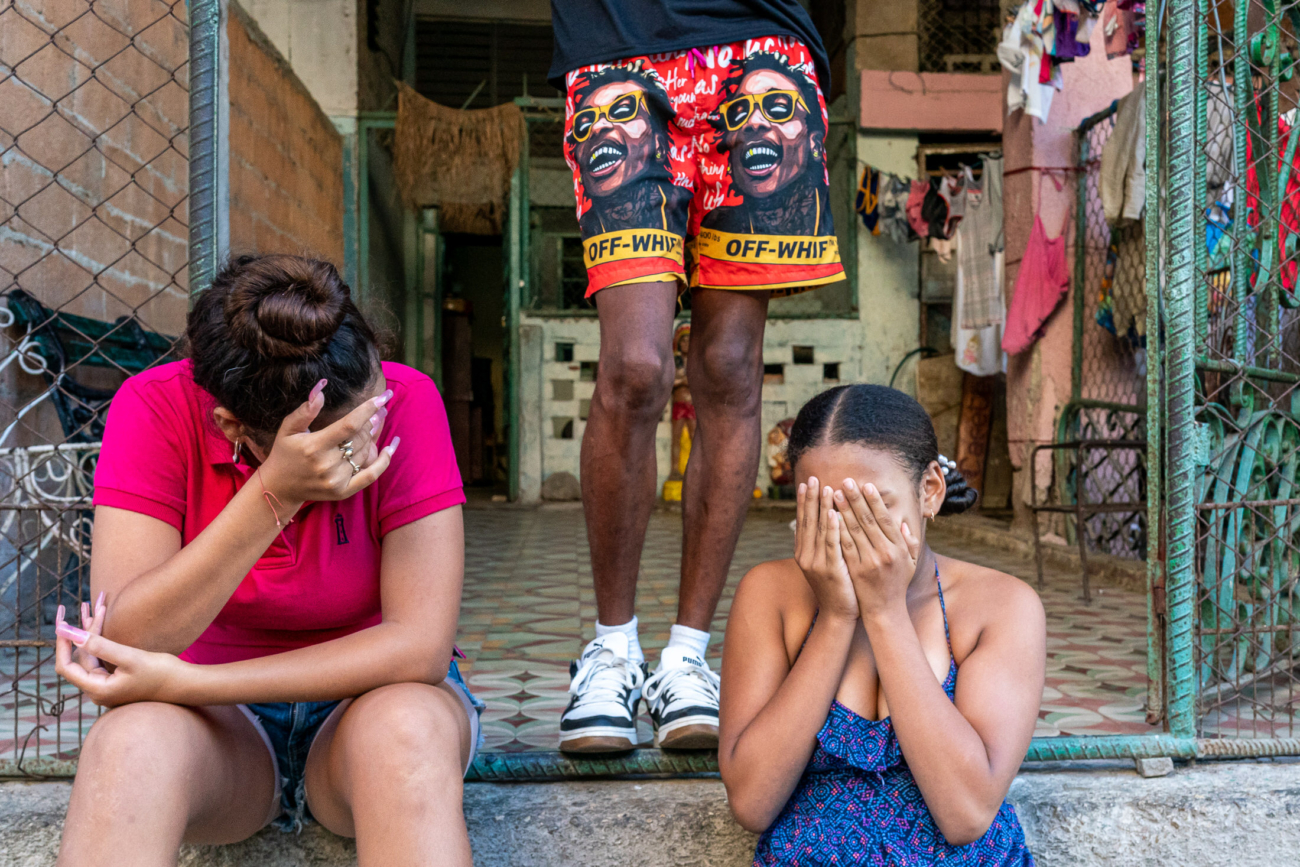
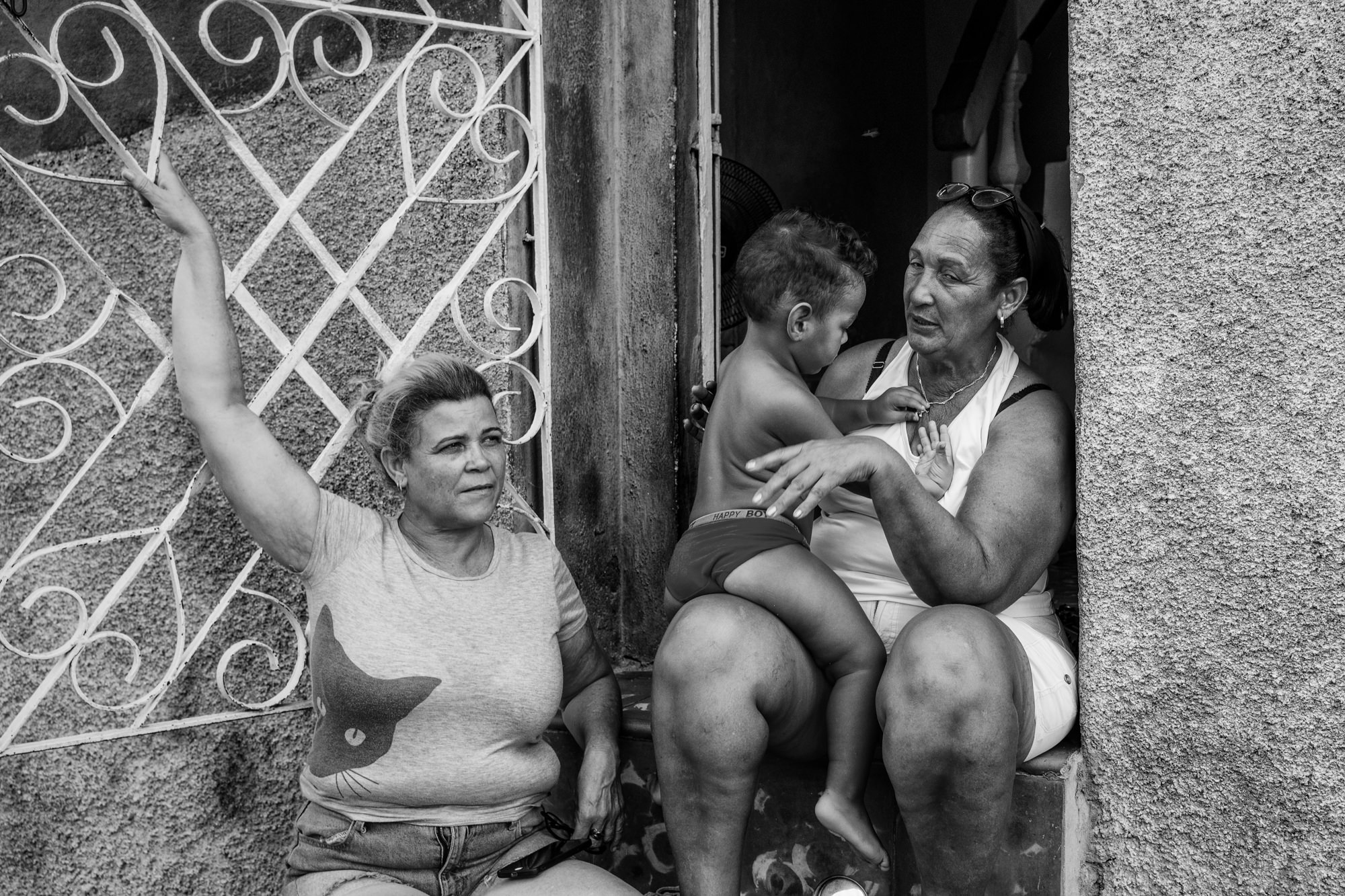
Move just a short distance away and everyday Havana takes over again. People sit in doorways, neighbours talk across the street and ordinary life continues alongside the colour and activity for which Callejón de Hamel has become known. It is often at these edges, away from the obvious attraction, that the more interesting photographs begin to appear.
San Isidro reveals another side of contemporary Havana. Its streets have become associated with artists, studios, galleries and murals, bringing a younger creative energy to one of the city’s older neighbourhoods.
Photographically, I find the contrast particularly interesting. Historic buildings and everyday street life sit alongside contemporary art and new ideas. Rather than simply photographing the murals themselves, I’m interested in how people inhabit these spaces and how Havana’s changing creative culture becomes part of daily life.
Obispo Street and the Malecón
Obispo Street in Old Havana has a completely different energy. It is one of the city’s busiest streets, filled with music, conversation and constant movement. Musicians play on corners, people weave through the crowds and shafts of sunlight appear briefly between the buildings.
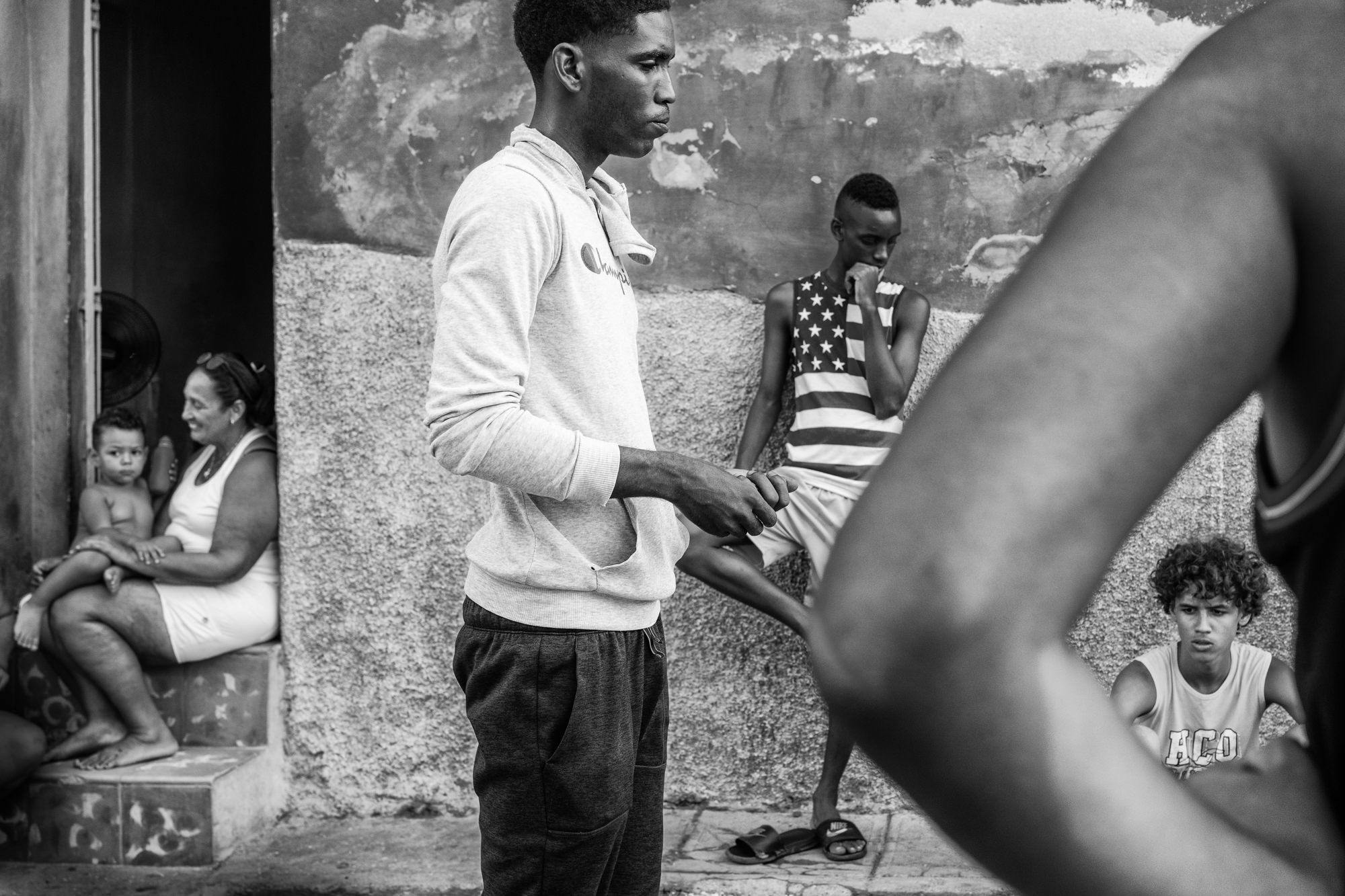
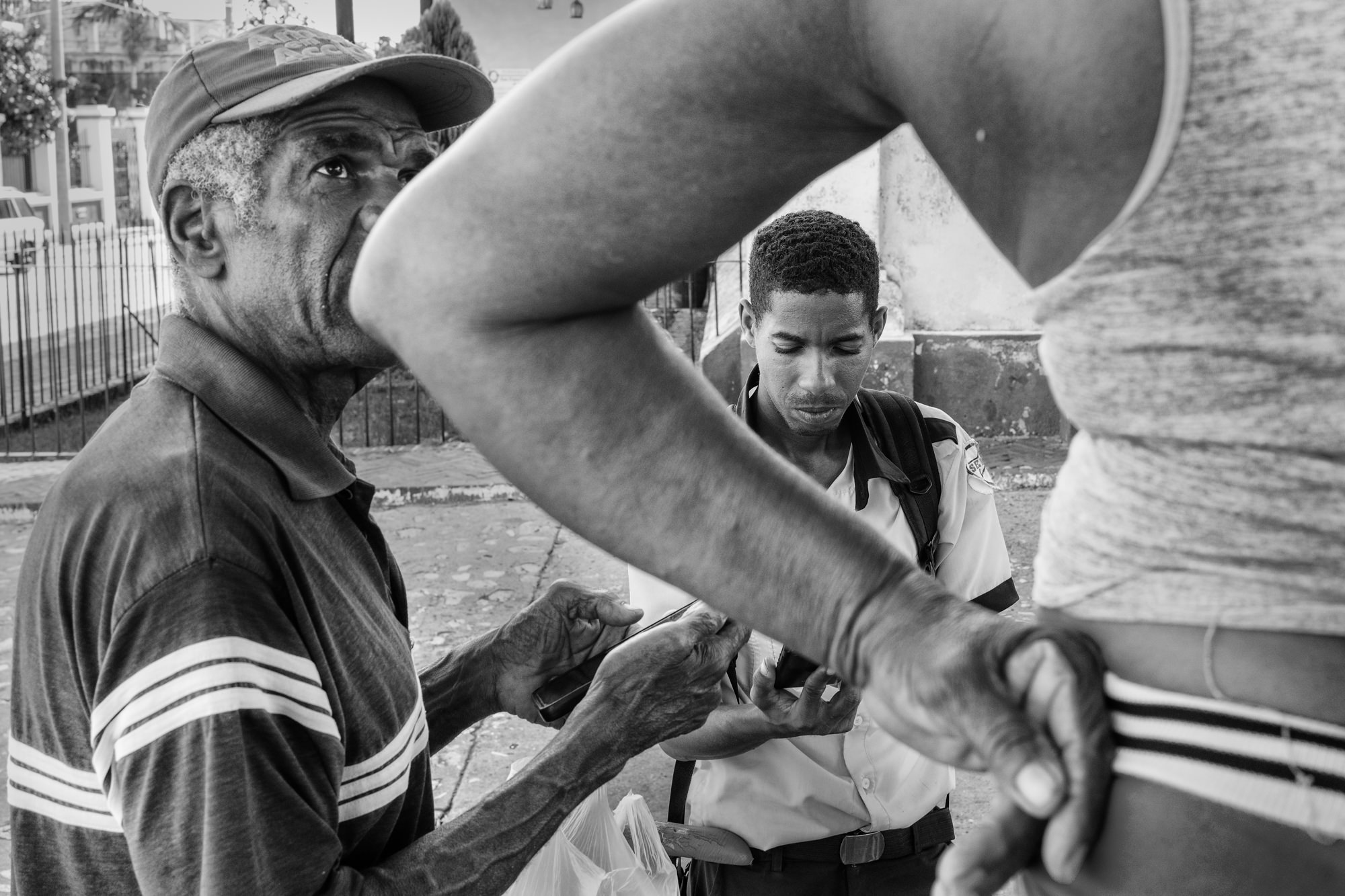
It would be easy simply to photograph the spectacle, but I find Obispo much more interesting when I stay in one place and watch. Gradually, smaller moments begin to emerge: an exchange between two people, a face appearing through the crowd, or several elements briefly coming together within the frame. Havana street photography is often about finding order within that constant movement.
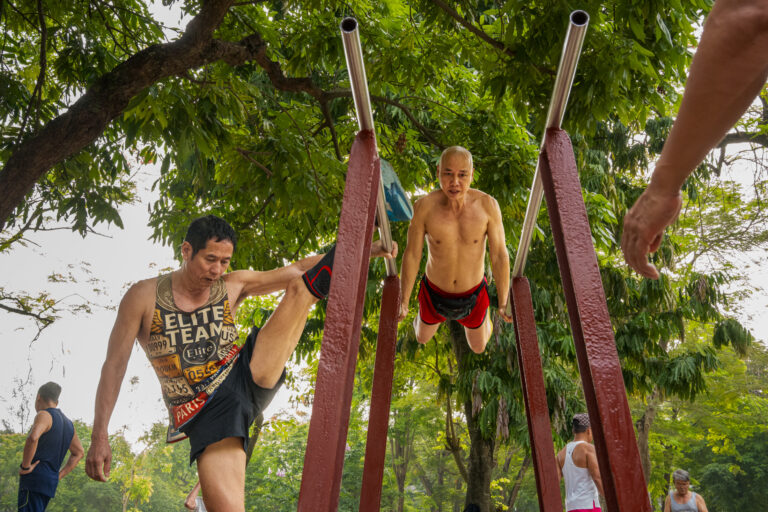
Scattered across the city, Havana’s parks and public spaces reveal another side of everyday life. Makeshift outdoor gyms sit alongside basketball courts and neighbourhood meeting places. People exercise, talk, argue, laugh and simply spend time together. They are ordinary spaces, but that is precisely what makes them interesting to me as a documentary photographer.
Between photographing, we would often stop at El Café in Old Havana for coffee and something to eat. These pauses are an important part of the way I work. Rather than constantly searching for the next photograph, I like having time to sit, watch and understand the rhythm of a place. Quite often, the photographs begin to appear when you stop actively looking for them.
And eventually there is the Malecón.
Towards the end of the day, people begin gathering along Havana’s famous seafront: families, couples, fishermen, musicians and friends meeting as the heat begins to disappear. The light changes, the pace slows and the wall becomes one enormous social space stretching along the edge of the city.
I’ve photographed the Malecón many times, but it never feels quite the same twice. Some evenings are full of activity; others are remarkably quiet. That unpredictability is part of what continues to draw me back to street and documentary photography in Cuba. You can choose where to be and give yourself the best opportunity, but ultimately you have to watch, wait and respond to whatever life gives you.
Where to Eat in Havana
Food became an important part of our time in Havana. After a long morning photographing the streets, sitting down somewhere good for lunch or meeting again over dinner gave us time to talk about the photographs we’d made, what we’d seen and where we might explore next.
These are some of the places I’ve particularly enjoyed and would happily return to.
El Rum Rum de la Habana is a relaxed Old Havana restaurant that became a favourite for seafood, Cuban cooking and an evening meal after a day on the streets.
La Vitrola sits close to Plaza Vieja and is particularly good for watching Havana life continue around you while you eat. Cuban food, music and its position in the heart of Old Havana make it an enjoyable place to stop.
Mojito Mojito is lively and informal, with Cuban food and live music. It works particularly well at the end of a day’s photography when nobody is quite ready to call it a night. Current listings continue to rate it highly among Havana restaurants. Tripadvisor
TaBARish offers a slightly different atmosphere, combining a restaurant and bar in the heart of Havana. I’ve enjoyed it when we’ve wanted a change of pace from some of the more traditional Cuban restaurants.
San Cristóbal is somewhere I’d save for a special evening. Set inside an extraordinary old Havana house on San Rafael, its rooms are filled with antiques, photographs and objects accumulated over the years. It has become one of Havana’s better-known paladares and makes a memorable place to celebrate the end of a journey. Tripadvisor
I’d retain El Café too, but only if you’ve personally been there recently enough that you’re happy recommending it. I couldn’t verify it as confidently from current sources as the others, so I wouldn’t pretend otherwise
Photographing Viñales: Rural Life in Cuba
After the constant movement of Havana, travelling west to Viñales brings an immediate change of pace. The streets and traffic gradually give way to open countryside, tobacco fields, horses and small farming communities set among the distinctive limestone hills of the Viñales Valley.
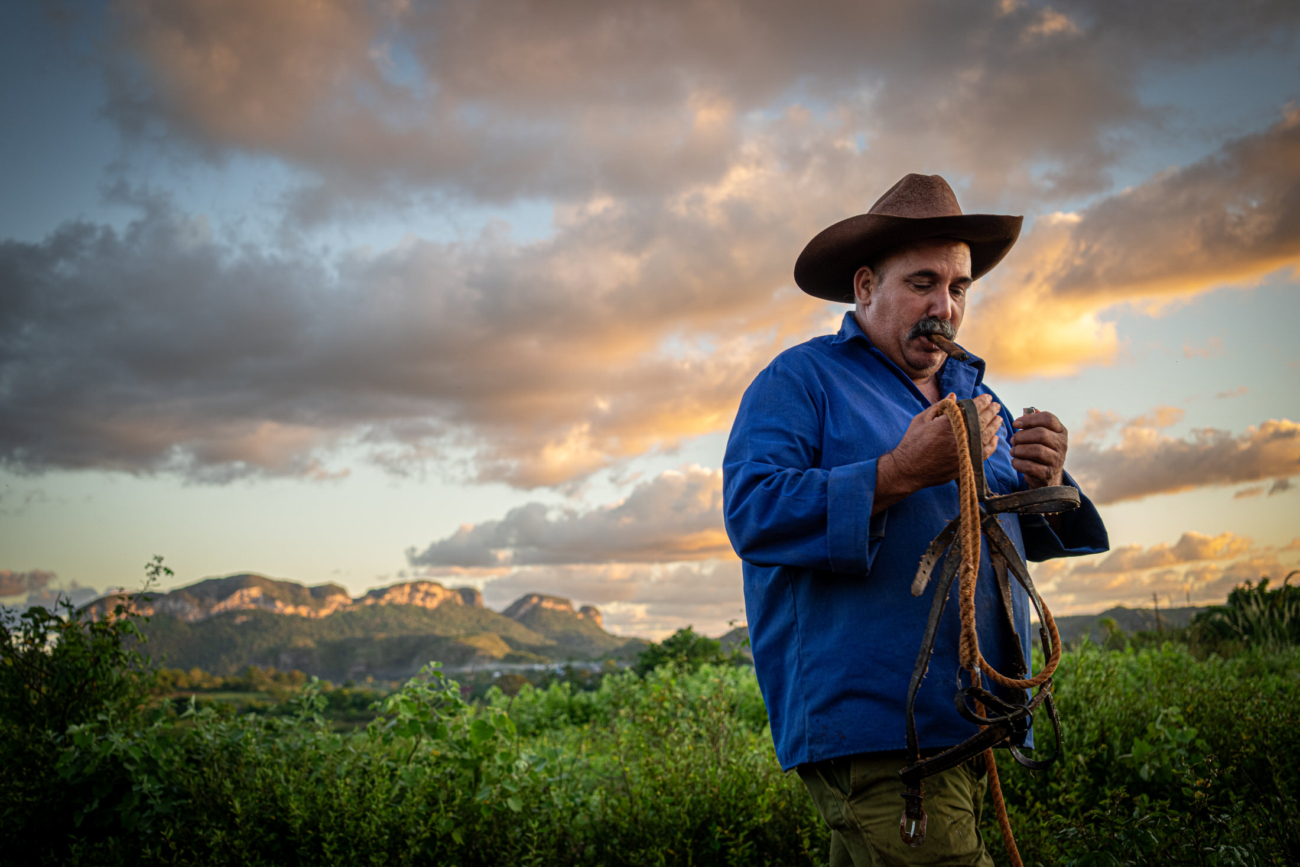
For me, photographing Viñales is less about searching for individual scenes and more about understanding the relationship between people and the landscape. Farming remains part of everyday life here, and spending time in the countryside gives you the opportunity to observe the routines that shape the beginning and end of each day.
Early mornings are particularly rewarding. Mist can settle across the valley as farmers begin working the fields, horses move along the tracks and the first light gradually reveals the extraordinary shapes of the limestone mogotes rising above the red earth.
The landscape is spectacular, but I’m rarely interested in photographing it simply as a landscape. What draws me to Viñales are the people within it: a farmer leading a horse through a tobacco field, someone working the land, or a figure appearing briefly through the morning mist.
It is this relationship between people, place and everyday life that makes documentary and travel photography in Viñales so rewarding. The photographs become about more than the beauty of the valley. They begin to tell us something about the lives being lived within it.
Life in the Viñales Valley
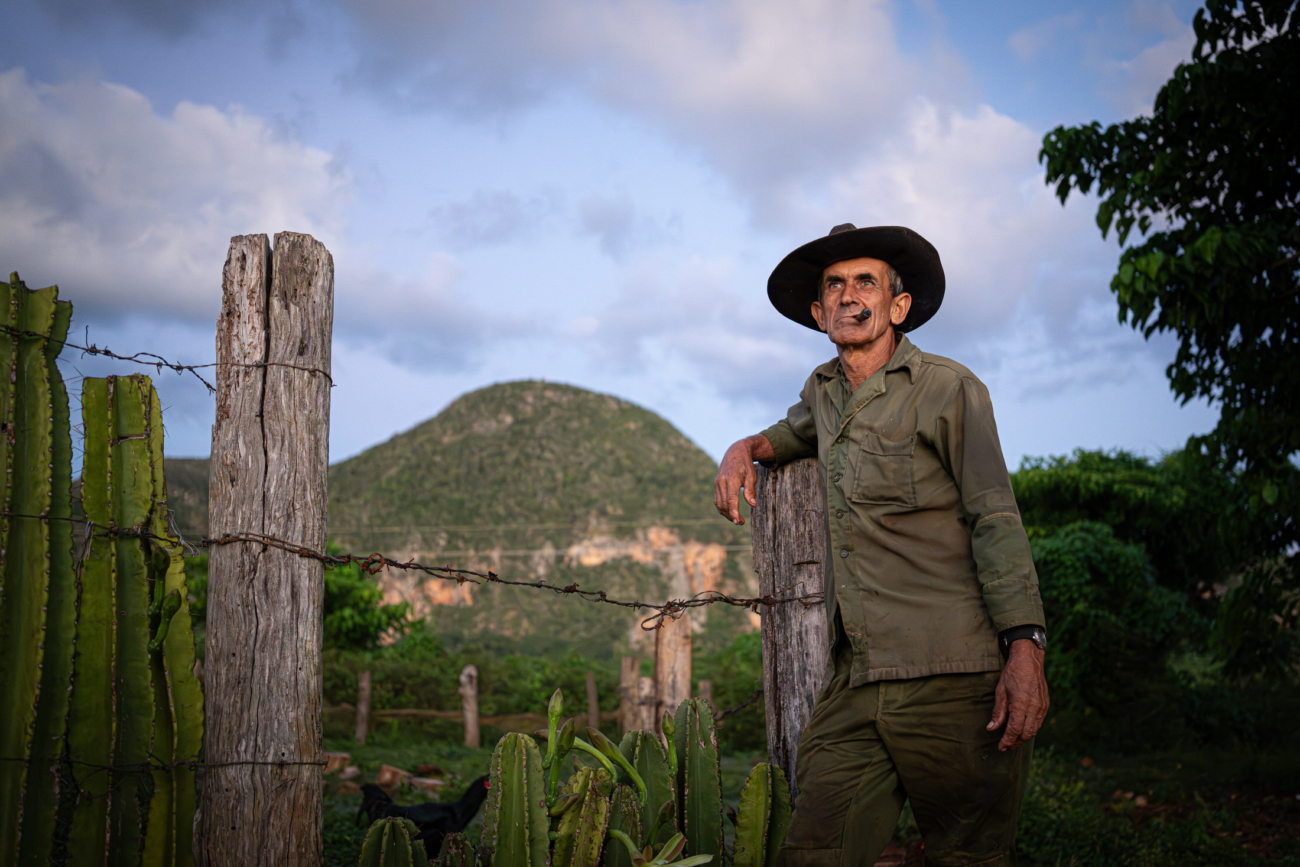
We spent time visiting farms around the Viñales Valley, meeting families whose lives remain closely connected to the land. Tobacco, coffee and other crops are still grown and prepared using skills passed through generations, and photographing these processes gave us an opportunity to understand something of the life behind the landscape.
Watching tobacco leaves being prepared and rolled by hand, or coffee beans being sorted, roasted and ground, naturally creates photographs. But I was equally interested in what happened between those moments: conversations between family members, someone disappearing into a field, a farmer returning on horseback or simply the gestures of people going about their everyday work.
At one small farm, we stopped photographing and sat together over cups of coffee that had been grown, dried and roasted there. Moments like this matter. Spending time with people without constantly pointing a camera at them creates a very different relationship, and often leads to more natural photographs later.
That is something I have increasingly come to value in documentary photography in Cuba. The camera may provide the introduction, but curiosity, conversation and time are what allow you to move beyond simply recording what a place looks like.
Later in the afternoon, the character of Viñales changes again. Shadows stretch across the fields, people begin returning from work, horses move along the tracks and children cycle between houses. The landscape remains an important part of the photograph, but I am always looking for the human element that gives it scale, context and meaning.
For photographers travelling through Cuba, Viñales offers a very different experience from Havana. There is less need to react quickly and more opportunity to watch, wait and allow photographs to develop in front of you.
For me, photographing rural Cuba is ultimately about that relationship between people and place. Slow down, spend time with people and resist the temptation to chase every possible photograph.
Very often, the picture will come to you.
Where to Eat in Viñales
Viñales might be a small town, but it’s full of charm – and some of the best meals in Cuba come from its farms and family-run restaurants. Here, food isn’t rushed; it’s grown, cooked, and served with the same care that defines the pace of life in the valley.
- Finca Agroecológica El Paraíso – A must-visit for anyone coming to Viñales. This working organic farm sits high on a hill overlooking the valley and serves incredible homegrown dishes straight from the fields around you. Most of what’s on your plate – from the vegetables to the herbs and even the coffee – is produced right there. The view alone is worth the visit, especially at sunset.
- 3J Bar Tapas – A lively and welcoming spot in the centre of town. The staff are friendly, the mojitos excellent, and the small plates perfect for sharing after a long day of shooting in the valley. There’s often music, a great atmosphere, and plenty of opportunities for people-watching from your table.
- Restaurant El Cuajani – A beautiful family-run restaurant just outside town, surrounded by greenery. Known for its warm service and traditional Cuban dishes made with fresh, local ingredients, El Cuajani has won several Tripadvisor Traveller’s Choice Awards for its quality and hospitality. Try the roast pork or the grilled fish, and make sure to leave room for dessert – all served with genuine Viñales warmth.
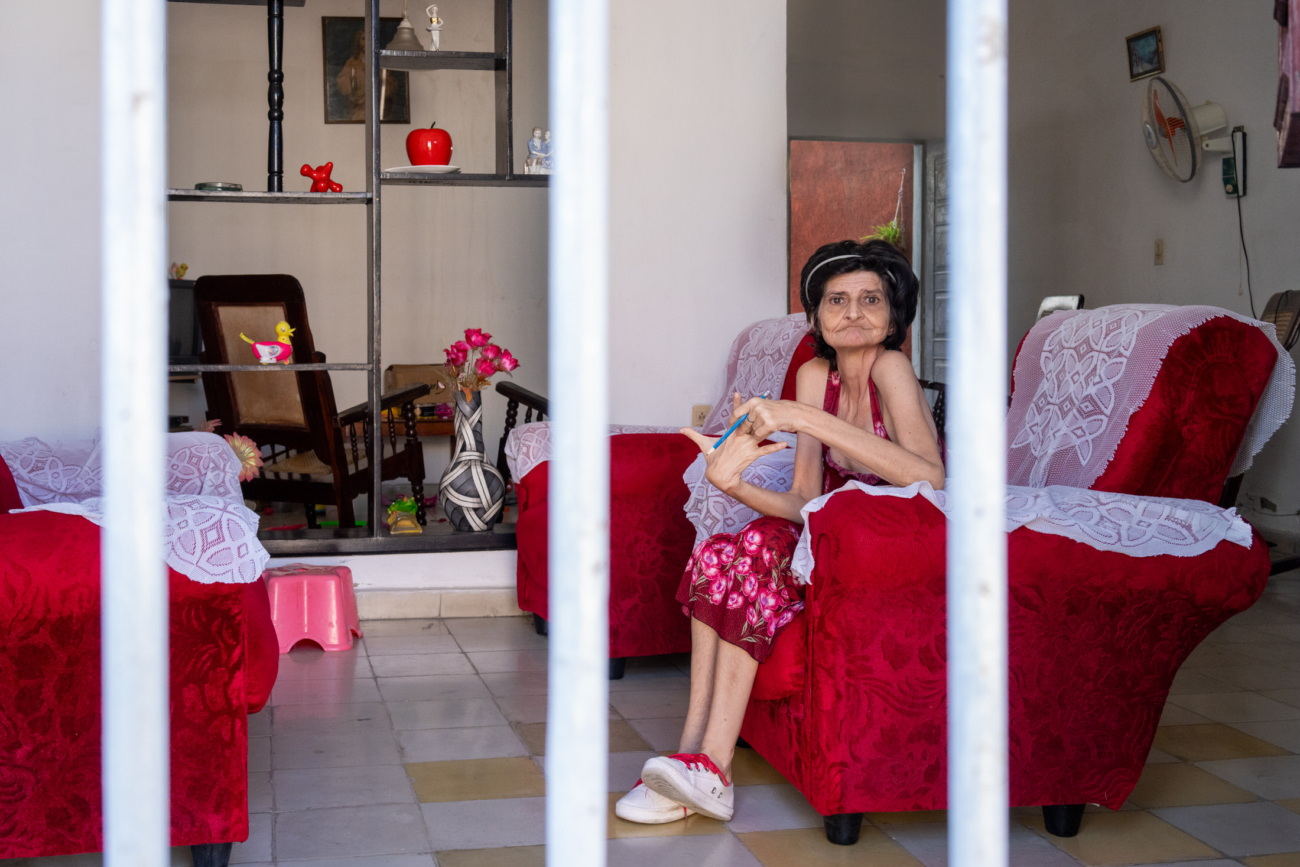
Photographing Cienfuegos: Elegance and Light
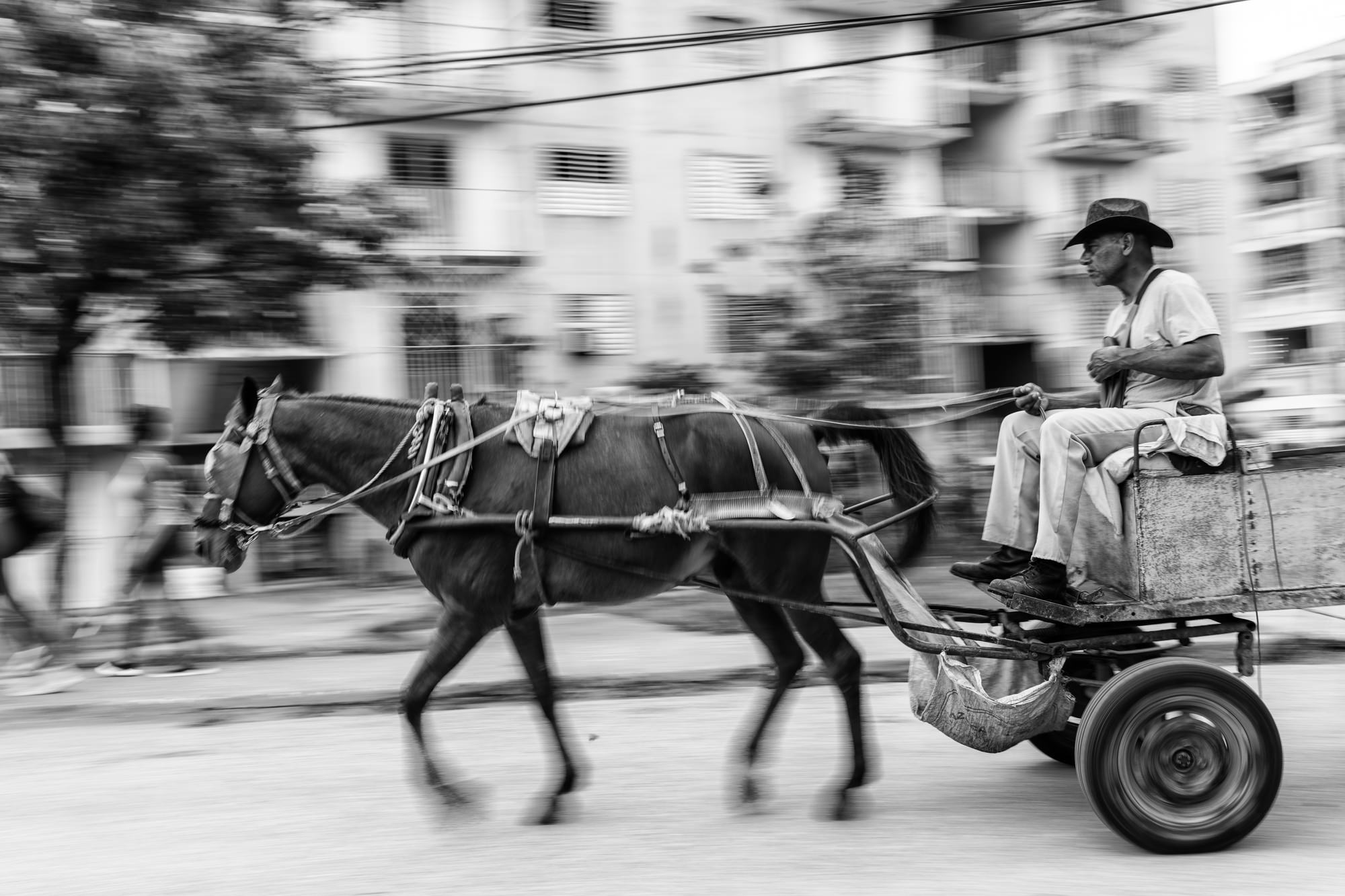
The journey from Viñales to Cienfuegos takes much of the day, but travelling by road is part of the experience. Leaving the tobacco fields and green valleys behind, we passed through small farming communities and open countryside, stopping whenever something caught our attention: a horse-drawn cart, children playing baseball in the road, or simply an unexpected moment of everyday life.
These unplanned stops are one of the things I enjoy most about photographing Cuba. Having the freedom to stop, wait and explore means the journey between destinations can be every bit as rewarding as the places themselves.
By late afternoon we reached Cienfuegos, and the change in atmosphere was immediate. After the rural landscape of Viñales, the city felt more ordered and spacious. Known as La Perla del Sur, the Pearl of the South, Cienfuegos has a distinctive architectural character, with broad streets, neoclassical buildings, colonnades and pastel façades creating a very different environment in which to work.
For a documentary and street photographer, that structure becomes part of the photograph. Around Parque José Martí, I found myself working with doorways, arches, shadows and long perspectives, finding compositions and then waiting for people to move into the right spaces within them.
This is a very different way of working from Havana. There, I’m often trying to make sense of layers of people and constant movement. In Cienfuegos, there is more space. A single figure crossing a patch of light, two people framed beneath an archway or someone appearing briefly within a doorway can be enough to complete the photograph.
That relationship between composition and the unpredictable movement of everyday life is what makes street photography in Cienfuegos so interesting to me. You can find the frame, understand the light and anticipate what might happen, but eventually you have to wait for life to provide the final element.
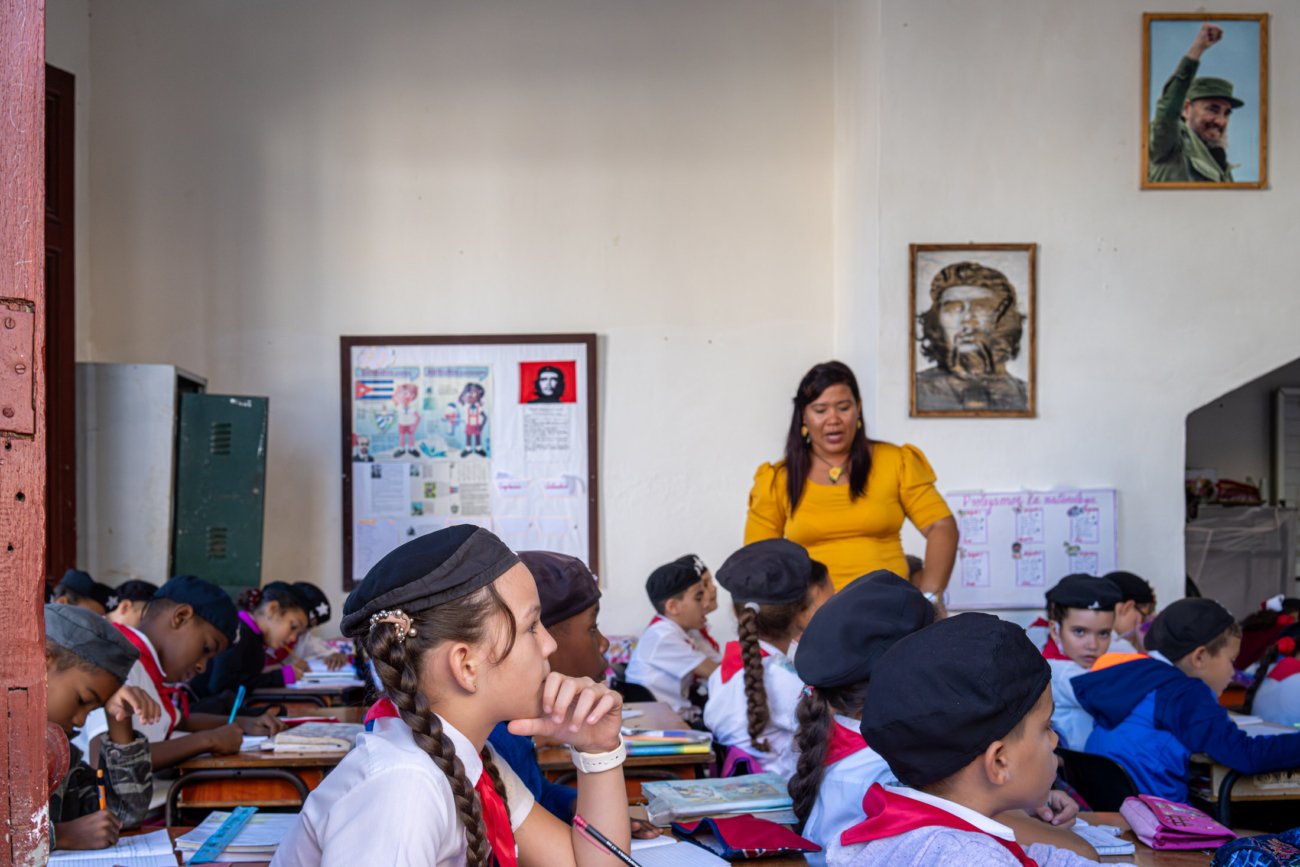
Down by the Malecón, the mood shifts again. The sea breeze cools the air, the light turns golden, and the bay reflects the pastel skyline in ripples of soft colour. Fishermen cast their lines from the seawall, while couples sit quietly, watching the sky change. It’s an ideal place to slow down, watch, and wait – Cienfuegos rewards patience and an eye for quiet storytelling. These tranquil moments, filled with light and reflection, are what define the beauty of Cuba street photography beyond Havana’s chaos.
Evenings are calm and warm here, the city bathed in soft light and the hum of conversation. Photographing in Cienfuegos isn’t about chasing action but finding rhythm in stillness – geometry, texture, and those unguarded human moments that seem to linger longer than they would elsewhere. After the vibrancy of Havana and the simplicity of Viñales, Cienfuegos feels refined – a place of balance and grace, where the light seems made for photographers, and every frame reminds you why Cuba street photography is among the most rewarding experiences in the world.
Where to Eat in Cienfuegos
We spent just one night in Cienfuegos, so I can’t pretend to offer an extensive guide to eating in the city. We did, however, have one of the best meals of our journey at Restaurante 40 & 41.
Close to the centre of Cienfuegos, it’s a contemporary restaurant with a relaxed atmosphere, excellent food and warm service. The seafood was particularly good, and after a long day’s drive from Viñales it was exactly the sort of place we wanted to sit, relax and talk through the journey.
We stayed nearby at the Meliá San Carlos, which made it an easy choice for our short time in the city.
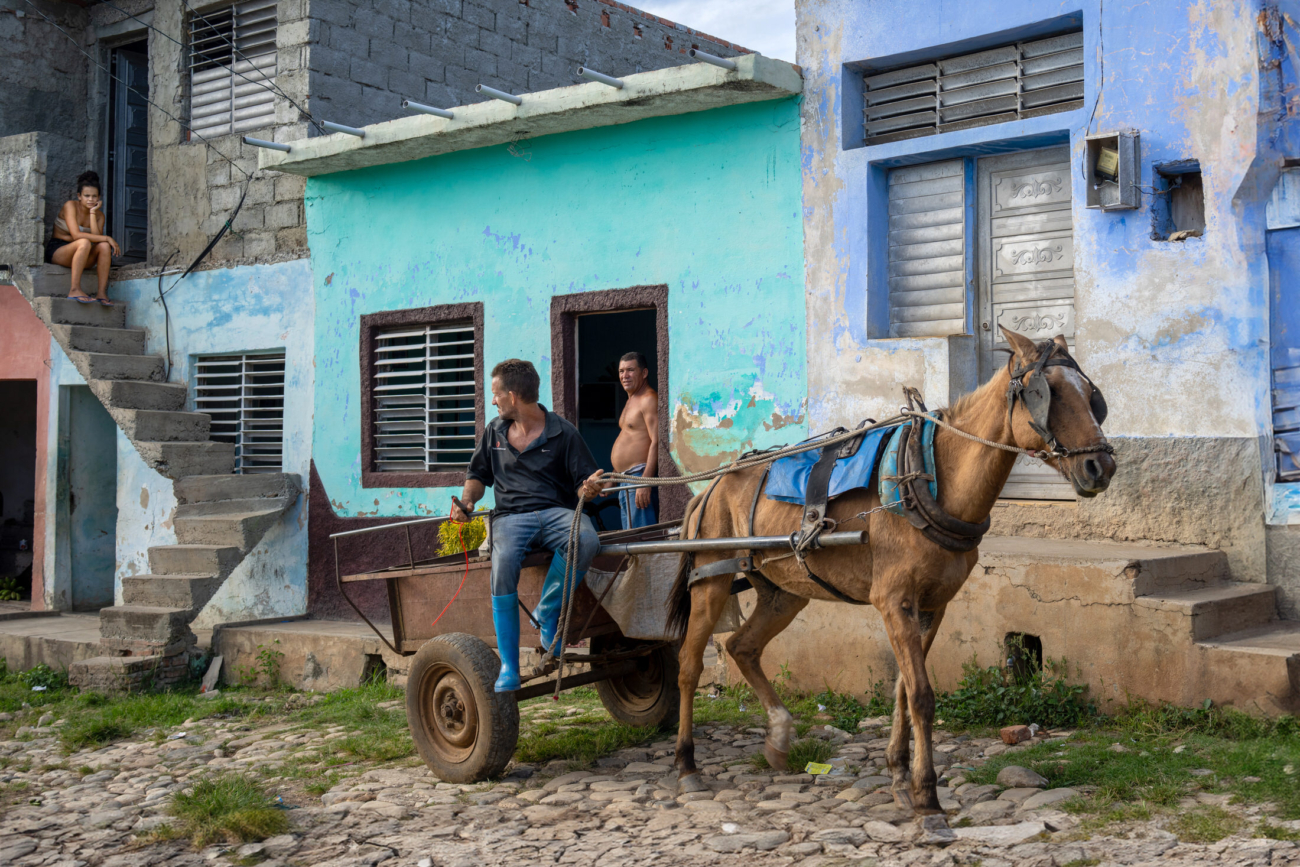
Photographing Trinidad: Life in the Streets
The drive from Cienfuegos to Trinidad follows the Caribbean coast before turning towards one of Cuba’s most distinctive towns. Arriving there brings another change of pace, and another completely different environment in which to photograph.
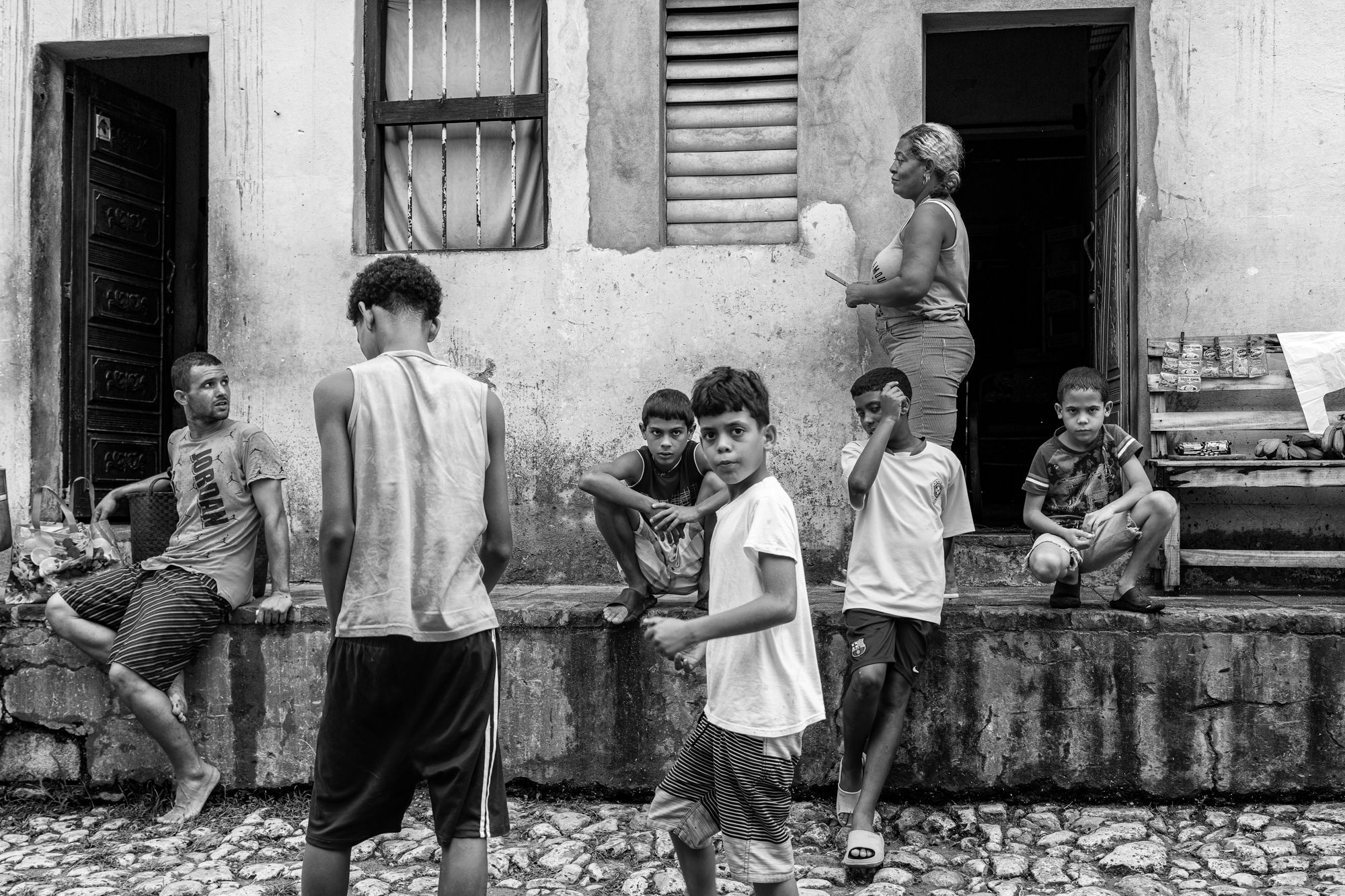
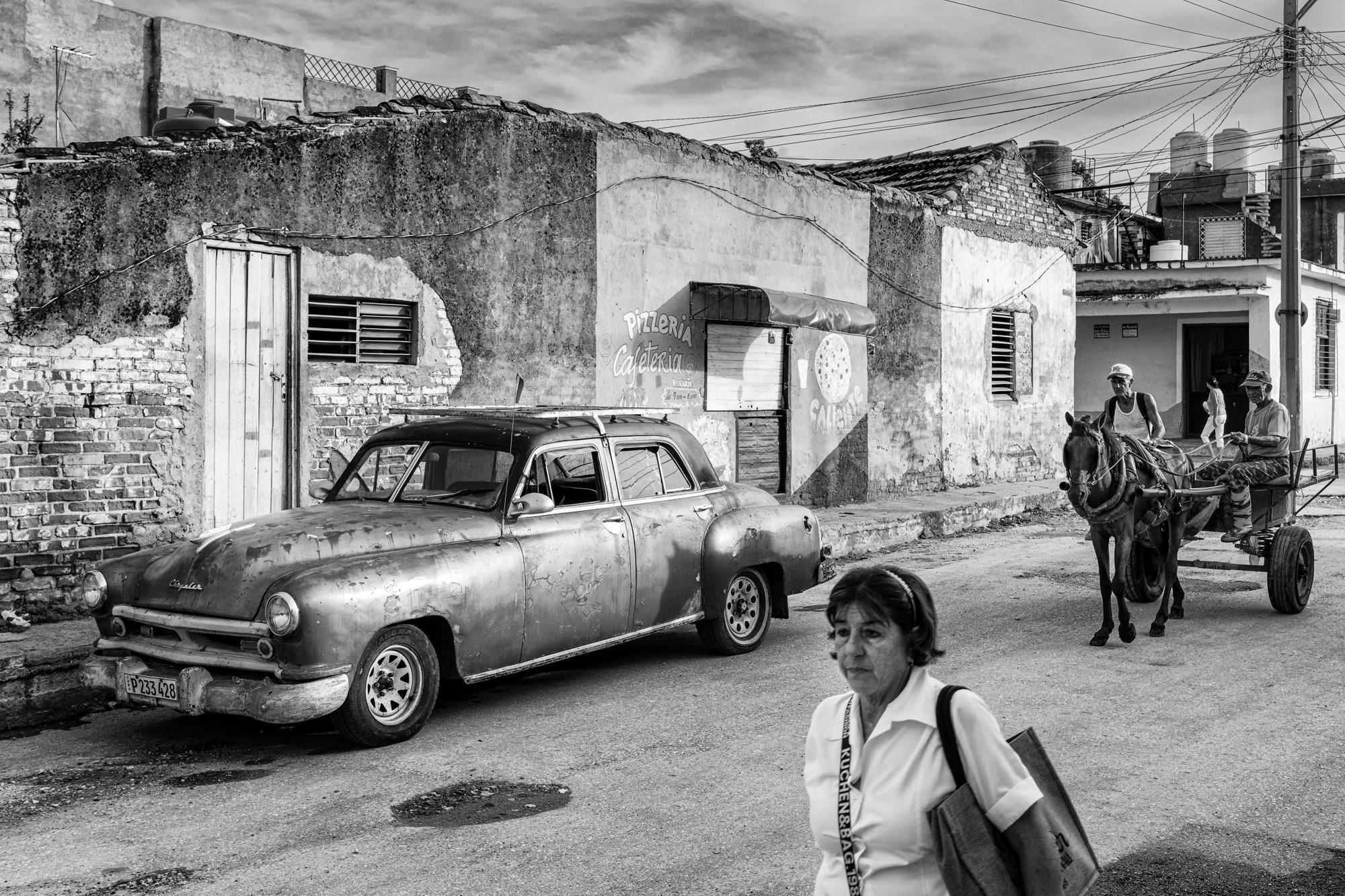
Trinidad is immediately recognisable for its cobbled streets, low pastel-coloured houses and extraordinary colonial architecture. Horse-drawn carts still share the roads with cars and bicycles, families sit outside their homes, and groups of friends gather in doorways and on street corners.
But for me, photographing Trinidad becomes much more interesting once you begin looking beyond the architecture.
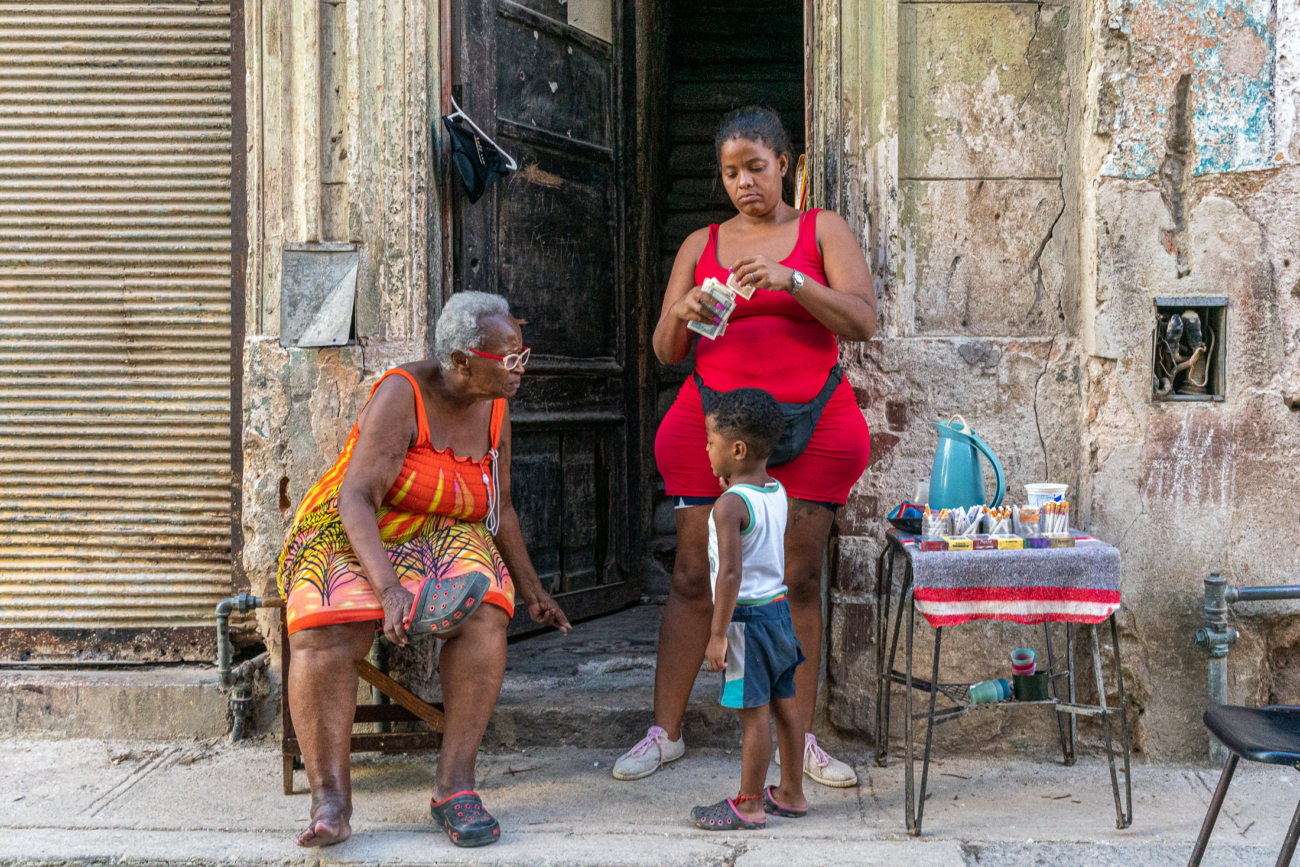
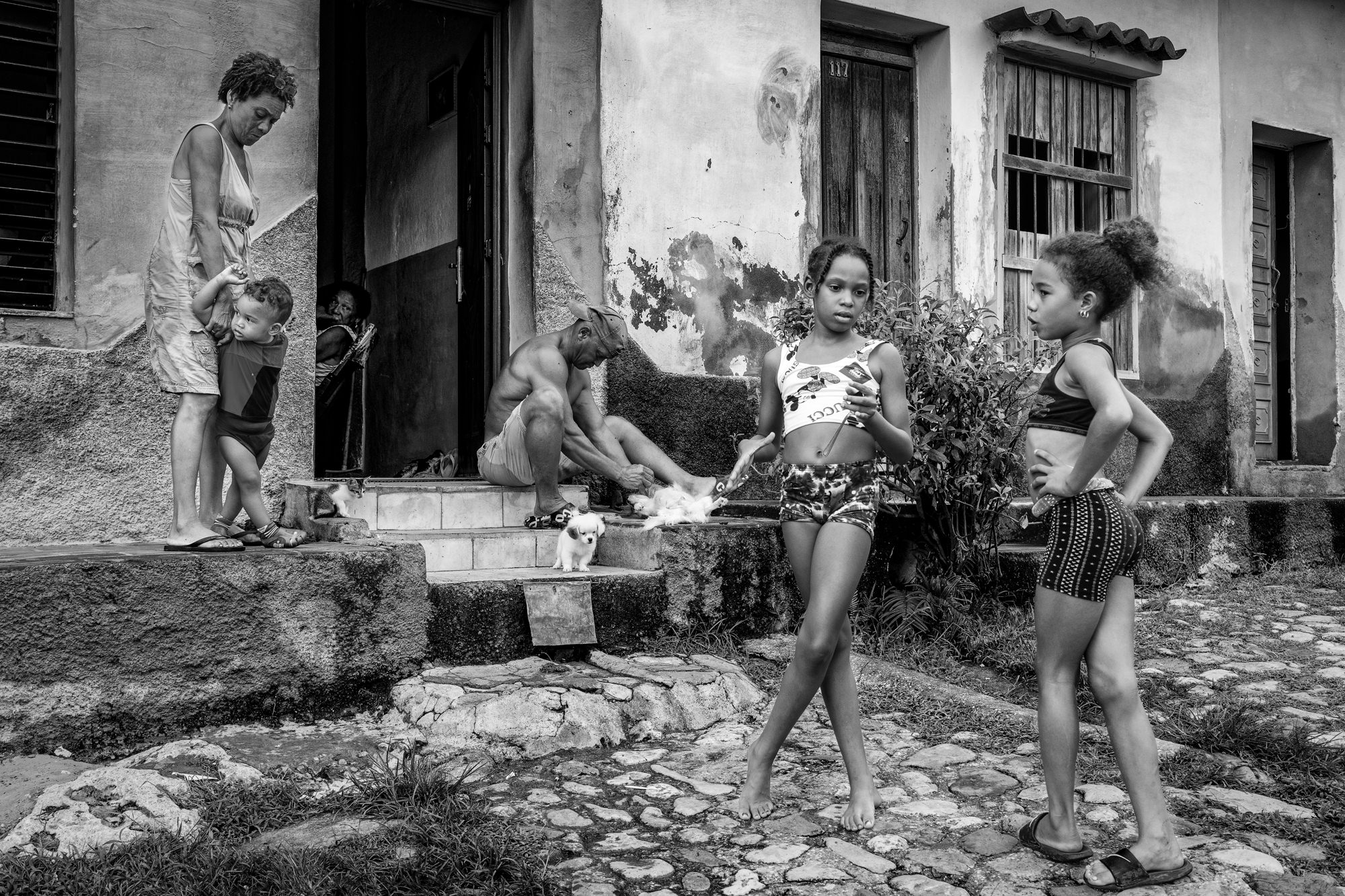
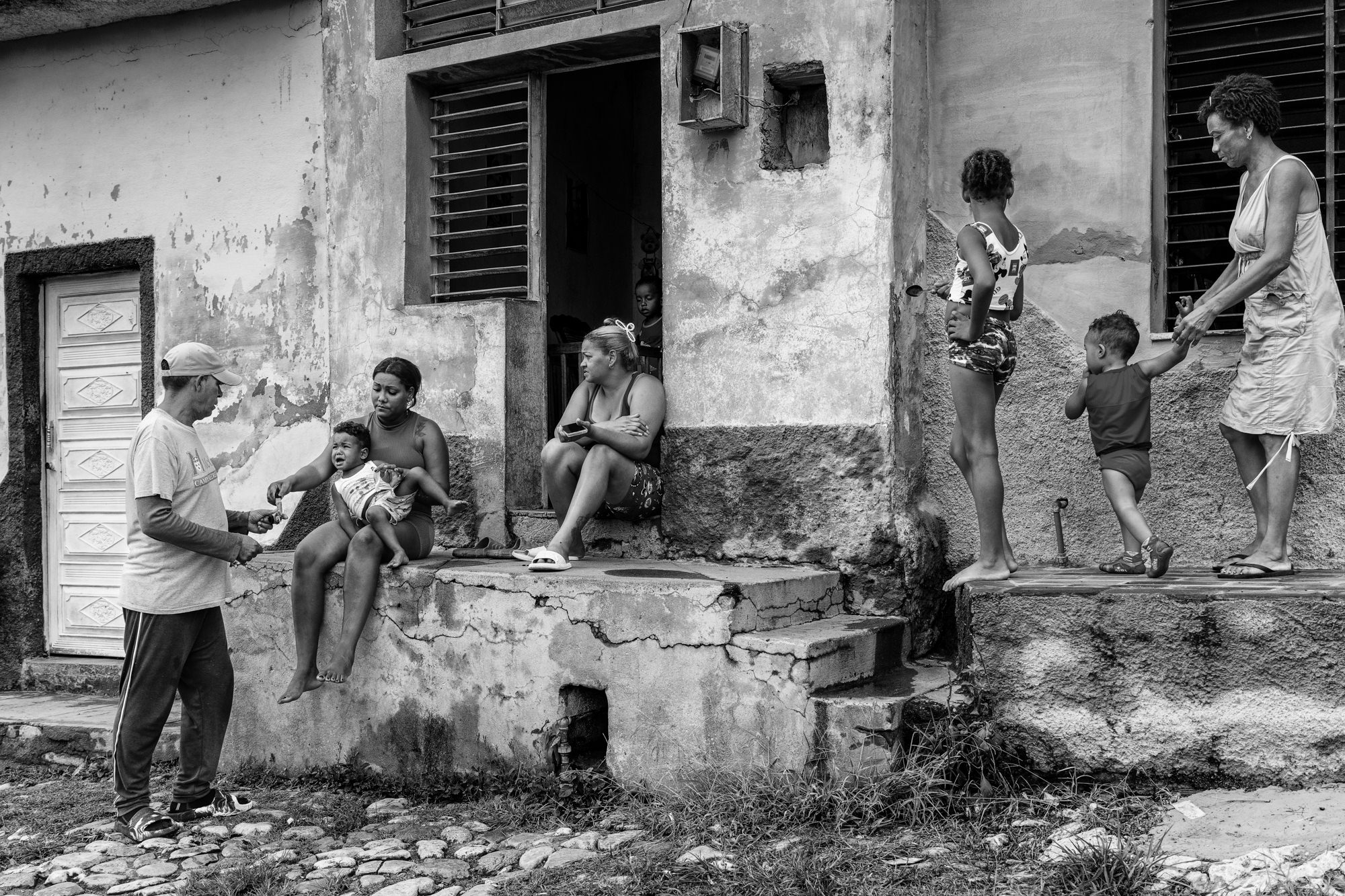
Early in the morning, before the streets become busy with visitors, everyday life gradually takes over. Doors open, people leave for work, children make their way through the streets and neighbours stop to talk. Later in the day, the light and activity change again, creating very different photographic possibilities.
The narrow streets and strong colours provide an obvious backdrop, but I’m always looking for the relationships between people and the spaces they inhabit. A figure appearing at the end of a street, someone framed within a doorway, or several people briefly occupying different layers of a scene can transform an attractive setting into a photograph that says something more.
That is what I find most rewarding about street photography in Trinidad, Cuba. The town gives you wonderful architecture, colour and light, but the photograph still depends upon observation, timing and the unpredictable movement of everyday life.
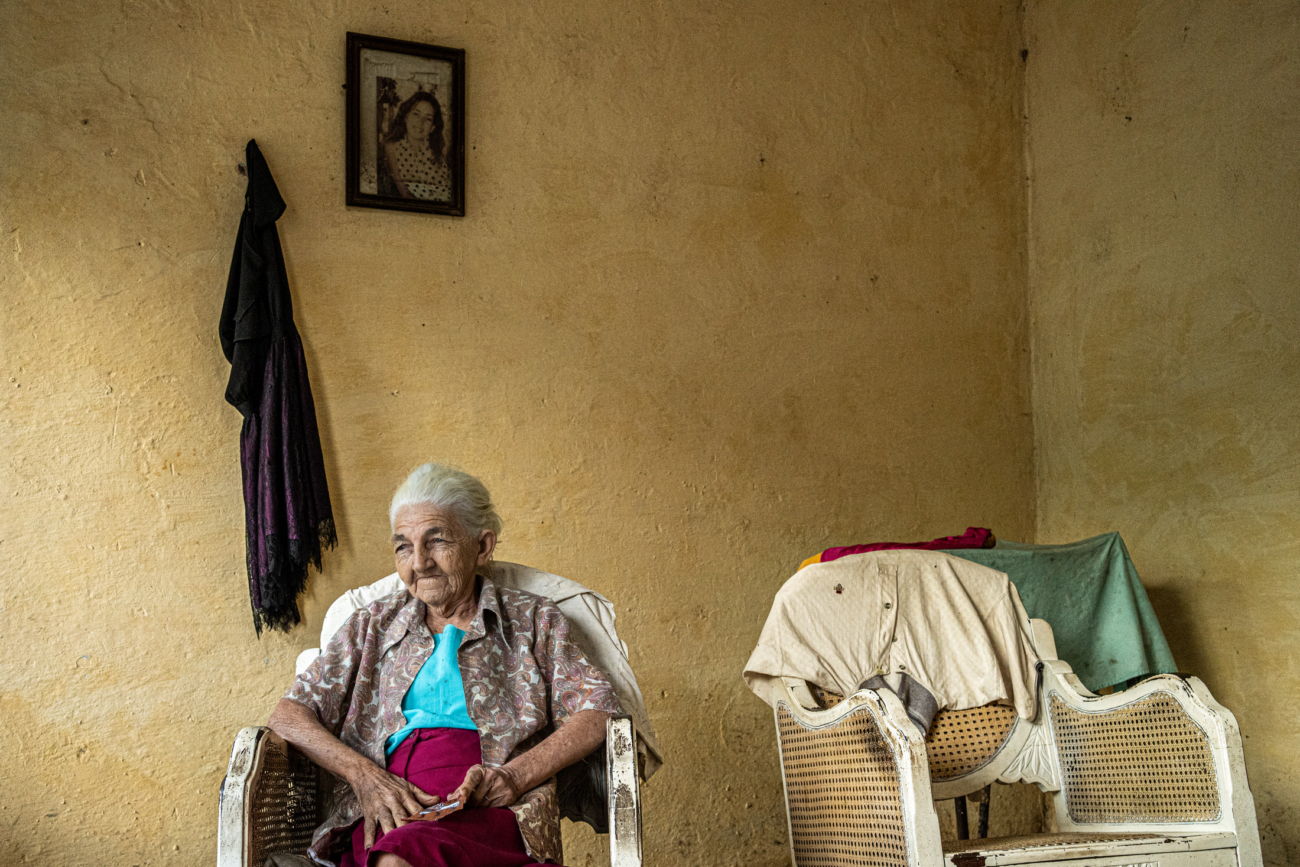
When and Where to Photograph Trinidad
For me, the best time to photograph Trinidad is early in the morning, from sunrise until around 9:30am, and then again from roughly 4pm until sunset. The light is lower and softer, but just as importantly, these are the hours when everyday life begins to fill the streets.
One of my favourite areas in the morning is the eastern side of town around Calle Bien Retiro, just beyond Café El Mago. The early light reaches the façades beautifully here and the streets are already beginning to come to life. Doors open, children make their way to school and neighbours stop to talk as they begin their day.
Rather than constantly walking, I often find a composition where the light and background are working and stay there for a while. Then it becomes a question of watching how people move through the space, anticipating gestures and waiting for the different elements within the frame to come together.
Later in the day, I particularly enjoy the western side of Trinidad around Calle Rosario and the surrounding streets close to the historic centre and La Popa. The late-afternoon light creates long shadows and strong areas of light and shade, giving you opportunities to work with people moving between them rather than simply photographing the colourful streets themselves.
You’ll encounter musicians, children playing, people sitting in doorways and friends gathering for games of dominoes, but I try not to approach these as a checklist of photographs to collect. The more interesting pictures usually come from spending time in an area, becoming familiar with its rhythm and responding to whatever happens.
One of the things I’ve always enjoyed about street and documentary photography in Trinidad is how naturally conversations can develop. I’ve found people curious, welcoming and often happy to talk, whether or not a photograph eventually follows.
That matters to me. The strongest photographs of people rarely come simply from pointing a camera at an interesting subject. They come from curiosity, respect and knowing when to photograph, but equally when to put the camera down.
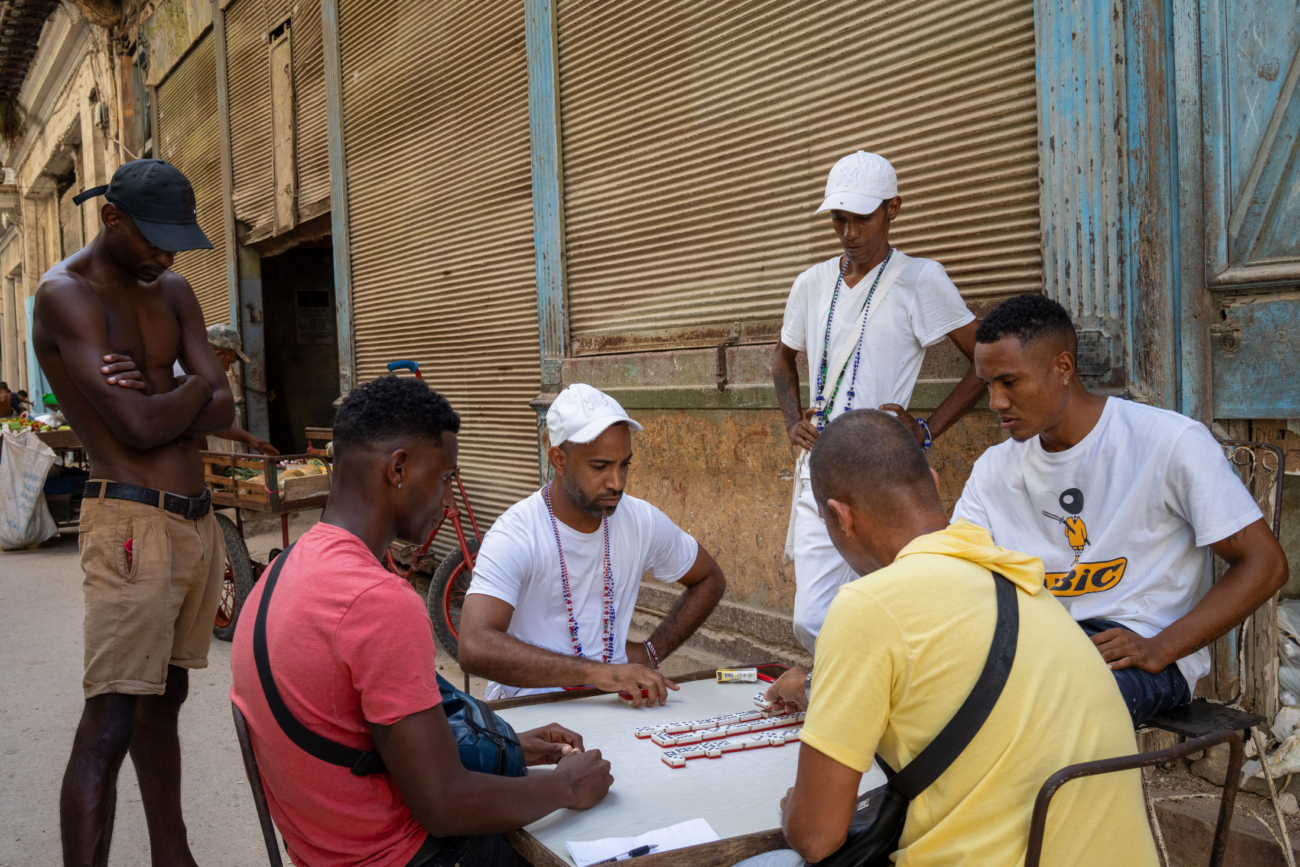
Around Plaza Mayor and in the quieter streets beyond it, small, unscripted moments appear constantly: a child running across the cobbles, someone briefly illuminated in a doorway, or a game of dominoes unfolding in the shade.
Individually, these moments may seem insignificant. But for me, this is what documentary photography in Trinidad is really about. Not searching for spectacle, but noticing the gestures, relationships and fragments of everyday life that reveal something about the people who live there.
Spend time in Trinidad, walk slowly and talk to people. Don’t feel the need to photograph everything you see. The more you observe and understand the rhythm of the streets, the more naturally the photographs begin to appear.
The best photographs rarely need to be chased. Sometimes you simply need to be there long enough to recognise them.
Where to Eat in Trinidad
Trinidad might feel frozen in time, but when it comes to food and atmosphere, it’s full of life. The town has a great mix of cafés and restaurants – the kind of places where you can linger over lunch with your camera close by, or unwind in the evening as music drifts through the warm air.
Food became part of the rhythm of our days in Trinidad. We tended to photograph early, stop somewhere for lunch when the light became less interesting, and head back onto the streets later in the afternoon. These are a few places we particularly enjoyed.
Café Muñoz Tapas
We found ourselves returning here most days for a light lunch or something to drink between photography sessions. It’s relaxed and informal, and its location makes it an easy place to stop without feeling that you’ve brought the day’s photography to an end.
Café El Mago
Another regular daytime stop, particularly for coffee after a morning photographing the nearby streets. It’s close to some of my favourite areas for photography, so became a natural place to sit for a while before heading out again.
Taberna La Botija
One of our favourite places for an evening meal. It’s lively and atmospheric, with Cuban food, drinks and often live music. After spending most of the day walking and photographing Trinidad, it’s the sort of place where you can settle in for the evening rather than simply stop for dinner.
Restaurante Guitarra Mía
A quieter alternative for dinner and another restaurant we particularly enjoyed. The atmosphere is more intimate and relaxed, with a mixture of Cuban and international dishes, making it a good place to finish a long day on the streets.
Back to Havana
Returning to Havana after two weeks travelling across Cuba felt different from arriving there at the beginning. The streets hadn’t changed, but perhaps we had. Places that had initially seemed chaotic now felt familiar, and we had begun to understand something of the rhythm of the city.
We spent our final day back in the streets of Old Havana, but without much of a plan. Cameras were still with us, of course, but there was no list of places we needed to photograph and no particular picture we were searching for. We simply walked, stopped when something interested us and enjoyed being back in the city where the journey had begun.
Lunch took us back to El Café, which had become a favourite during our first few days. Sitting there over coffee gave us time to look back on the journey and the extraordinary variety of places and people we had encountered along the way.
Later, we made our way to the Hotel Nacional de Cuba, one of Havana’s great landmarks. Sitting outside overlooking the Malecón as the light began to disappear was a suitably unhurried way to spend our final evening.
For one last journey through Havana, we travelled in the old American cars that have become such a familiar part of the city’s visual identity. I’d photographed them countless times during the trip, but sitting inside one and watching Havana pass by offered a rather different perspective.
We finished the evening with dinner at El Rum Rum de la Habana, talking about the journey, the people we’d met and, inevitably, the photographs we’d made.
But looking back, it isn’t simply the individual photographs I remember.
It’s stopping the car because we’d noticed something happening beside the road. Sitting with a family over coffee in Viñales. Waiting for someone to move through a patch of light in Cienfuegos. Conversations in the streets of Trinidad. And those long periods in Havana when nothing appeared to be happening until, suddenly, everything came together for a fraction of a second.
That, for me, is the real pleasure of photographing Cuba.
You can plan the journey. You just can’t plan the photographs.
One Last Evening
As the evening drew to a close, we lingered a little longer. A glass of Cuban rum, a Cohiba cigar and music playing somewhere in the background felt like an appropriate way to spend our final hours in Havana.
There was no longer any urgency to make photographs. After fourteen days travelling across the island, it was enough simply to sit together and enjoy the city.
Perhaps that is one of the things Cuba had reminded me of most. Photography gives us a reason to travel, to be curious and to look more closely, but sometimes the camera needs to stay on the table.
Some experiences are worth simply being there for.
More Than the Photographs
This journey was never only about the places we visited or the photographs we made. Over fourteen days, eight photographers travelled together through Cuba, sharing early starts, long days on the road, meals, conversations and inevitably plenty of laughter along the way.
Travelling in a small group changes the experience. There is time to stop when something catches our attention, change plans when an opportunity appears and share what we are seeing and learning as the journey unfolds.
By the end of the trip, we had become much more than a group of photographers travelling together. Friendships had formed through the shared experience of discovering and photographing Cuba.
On our final day, we sat together and looked through some of the photographs we’d made. Every photographer had seen Cuba differently. The same streets, people and situations had produced completely different images, which is one of the things I find endlessly fascinating about photography.
We returned home with photographs we were proud of, but also with stories, friendships and memories that had very little to do with cameras.
And perhaps that is the real measure of a successful photographic journey.
A Photographer’s Reflection: What Cuba Taught Me
Cuba reminded me of something I have learned repeatedly through documentary photography: the more time you give a place, the more it gives back.
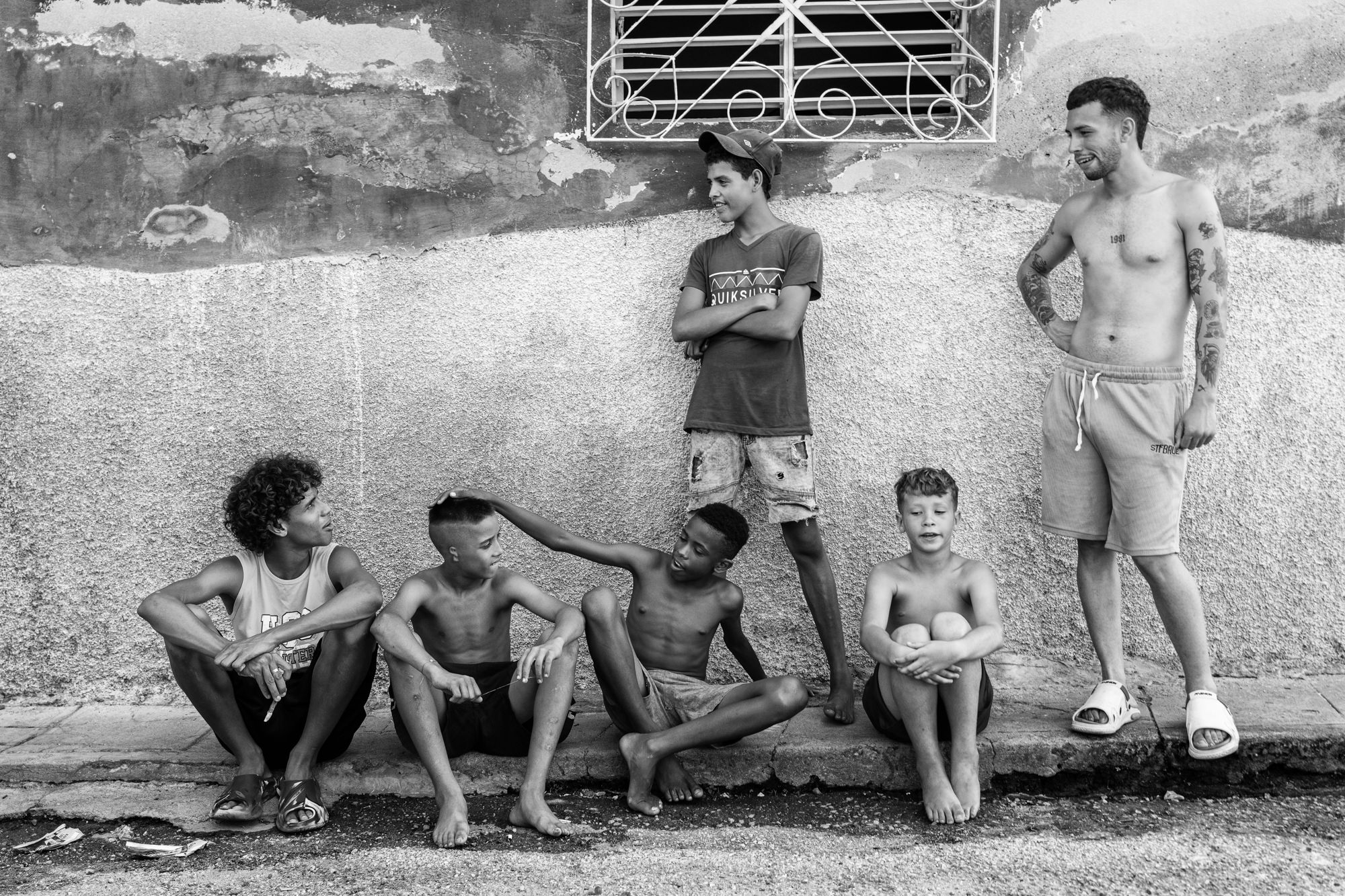
At first, it is easy to be distracted by the obvious Cuba: the old American cars, faded architecture, music and extraordinary colour. They are impossible to ignore and inevitably become part of the photographs.
But spend longer on the streets and you begin to notice something else.
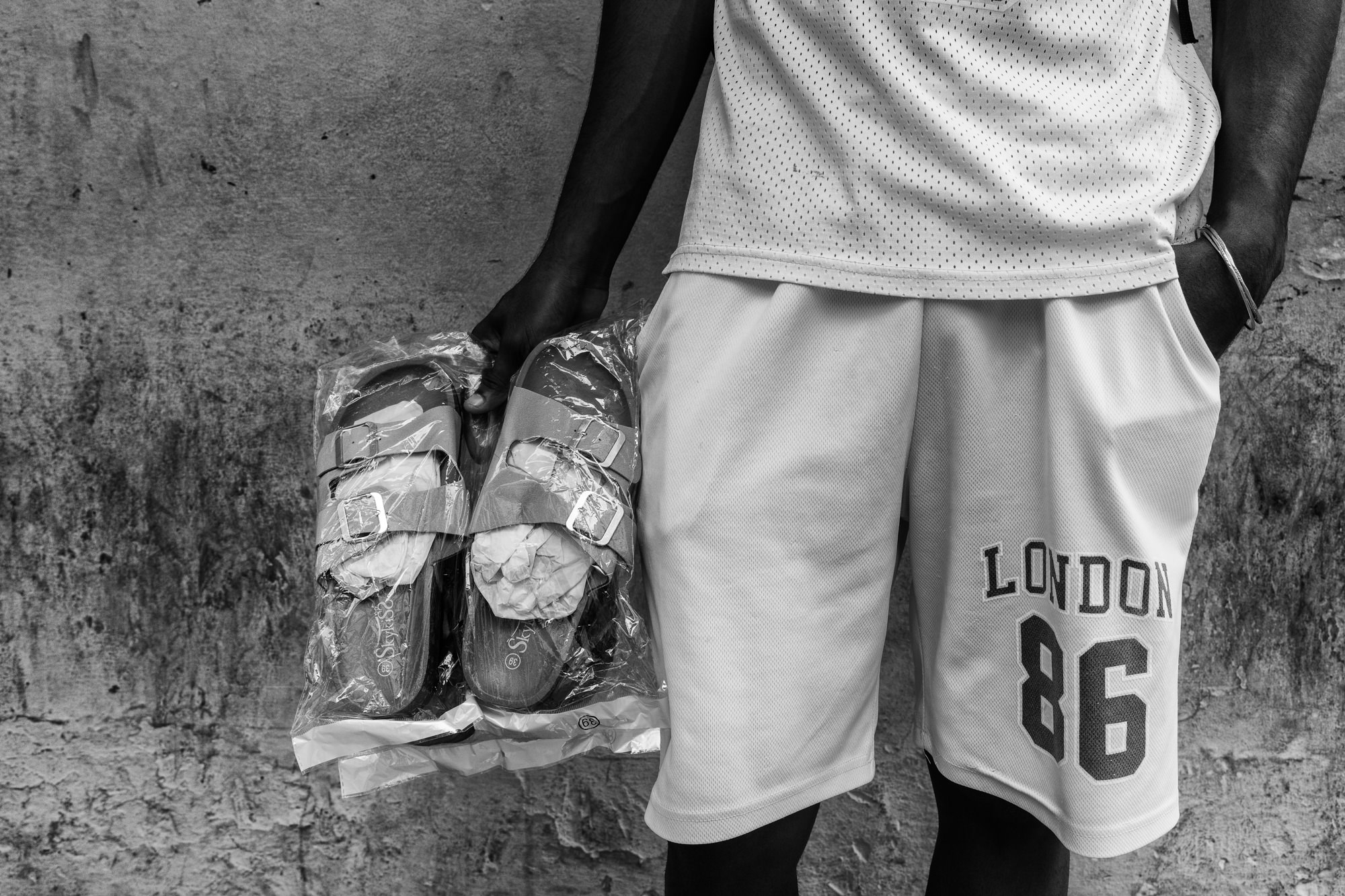
The conversation taking place in a doorway. Children inventing a game in the street. A glance between two people. Someone briefly stepping into a shaft of light. The small, seemingly insignificant moments that tell us far more about everyday life than the obvious photograph ever could.
Cuba also reinforced the importance of engaging with people. Some photographs came from simply observing quietly; others began with a conversation, a smile or the decision to put the camera down for a while.
That balance matters to me.
Documentary photography isn’t simply about being in the right place with a camera. It is about curiosity, patience and being genuinely interested in the people and places in front of you.
The photographs may be what we bring home, but they are only part of the story.
Photograph Cuba with me
Cuba is a country I return to because there is always more to discover. My small-group Cuba photography journeys are built around time, flexibility and access, allowing us to explore beyond the obvious locations and photograph everyday life as it unfolds.
We travel with small groups so that we can respond to opportunities, change direction when something interesting happens and spend time in places rather than simply passing through them. Along the way, I work closely with each photographer, helping with observation, composition, layering and visual storytelling.
These are journeys for photographers who want more than a collection of photographs of Cuba. They are about experiencing the country, meeting people and developing a stronger way of seeing and photographing the world around you.
Explore Cuba Photography Journeys →
Then underneath:
Explore more: Cuba Photography Gallery · Photography Mentoring