

My Dad, Ronnie
Ronnie’s Story is a dementia photography project documenting the final years of my father Ronnie Seymour’s life and the effect dementia had on him, my mother and our family. What began as a deeply personal record eventually became an internationally recognised documentary project and exhibition.
Dad was an amazing man. I know most sons would say that about their father, but Ronnie Seymour was, and still is, my hero.
Dad taught my brother and me so much through the way he lived his life. He had an incredible work ethic and seemed able to make or repair almost anything around the house, from building cupboards to laying the bricks for the garden wall.
But more importantly, he showed us what it meant to be a man devoted to his wife and his family.
Ronnie was a real character. Even as dementia gradually took away many aspects of the man we knew and loved, right until the end people would still comment on the twinkle in his eye.
And there are so many stories.
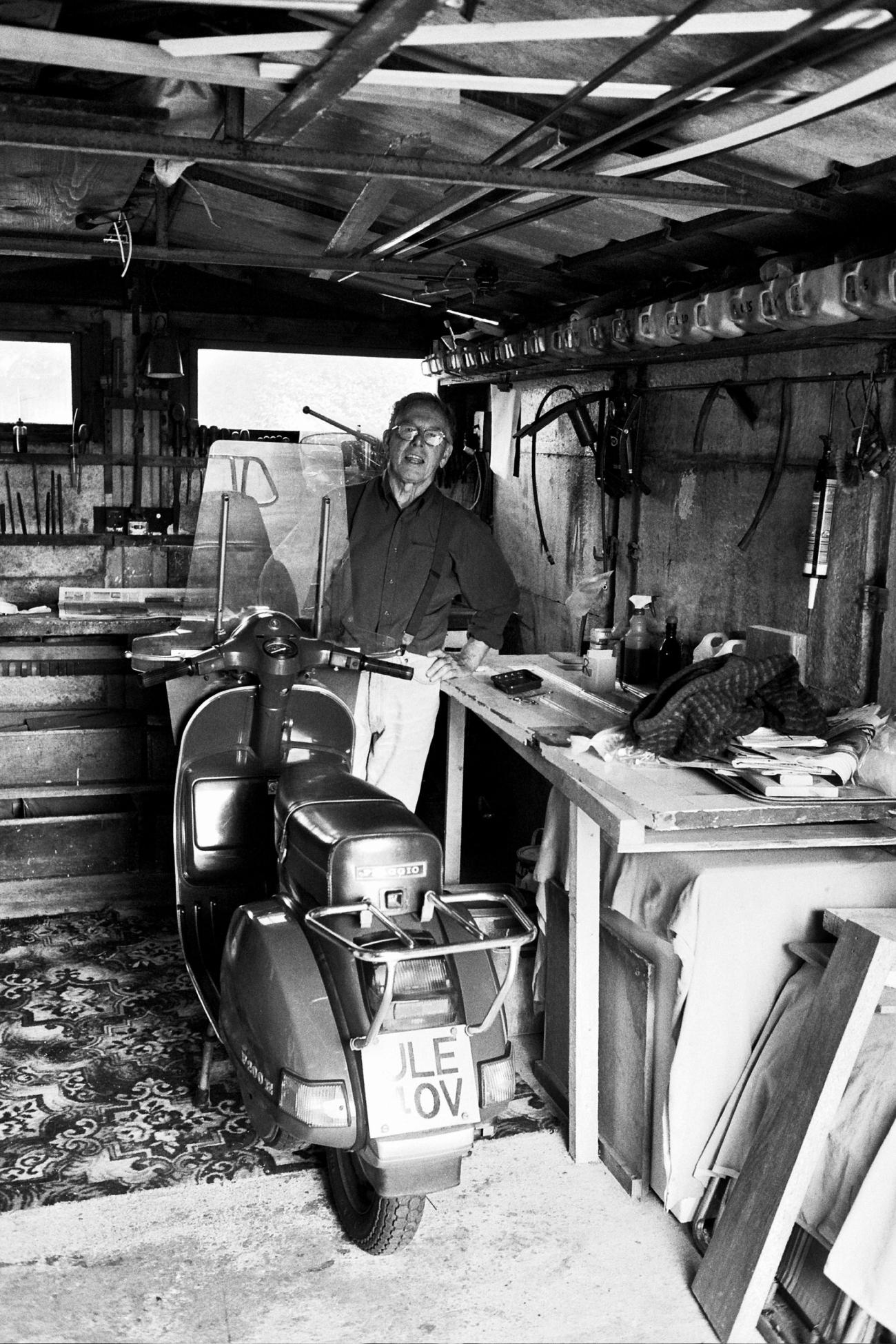
There was his pride and joy, a Vincent Black Shadow motorcycle. His garage seemed to contain every conceivable type of nail, screw and tool, all carefully kept because they might be needed for the next project.
There was the hand-built canoe he once strapped to his bicycle, which, as young lads, my brother and I were rather embarrassed to be seen walking alongside.
And then there were the homemade roller-skates he built for himself simply so he could go skating with his grandchildren.
It was all completely normal to Dad.
He was practical, inventive, funny and endlessly curious, but above everything else he was a family man.
Those memories became increasingly important as his dementia progressed. The photographs in Ronnie’s Story aren’t simply a record of dementia. They’re photographs of my dad, and of the character, humour, dignity and relationships that remained even as the disease gradually changed his life.

Dad outside the bungalow that was the only home he and Mum ever owned. Dad was born at No. 13 Mead Way and, when he and Mum married in 1961, they bought No. 3 Mead Way for the princely sum of £2,000. Mum remained there until 2024, when she moved into sheltered accommodation.

After Dad developed dementia, I took Mum and Dad back to the Ace Cafe in London on several occasions. They had often come here when they were courting, riding together on Dad’s beloved Vincent Black Shadow. I hoped that returning to somewhere so connected with their early years together might bring back some of those memories.

Dad sitting at home holding a framed photograph of his beloved Vincent Black Shadow, with my brother and me sitting on the bike as children. As Dad’s dementia progressed, this photograph became the starting point for many conversations. His memory might have been fading, but his knowledge of the Vincent remained remarkable. He could still recite its performance figures and name many of the motorcycle’s components in extraordinary detail

Dad’s daily tablets, carefully put out for him by Mum each morning with a glass of water. As his dementia progressed, these small routines became an increasingly important part of their everyday life together.

The last birthday card Dad ever chose for Mum. I remember taking him to John Lewis and watching him spend ages trying to decide which card to buy. Eventually, I narrowed it down to two, held them both up and simply asked, “This one or this one?” Dad pointed to the one he wanted. It was important that, despite his dementia, the choice was still his.

Dementia has no filters…
Dad was struggling to write Mum’s birthday card. After managing to write “Lots of love”, he turned to me with that familiar wicked smile and a naughty little giggle.
“What shall I sign it?”
I said, “Well, what do you want to sign it, Dad?”
He looked at me with a cheeky grin and said, “Shall I sign it from Big Bollocks?”
He thought about it for a moment, laughed and then said, “No, I’d better not,” before signing the card in his own way.
Dad had always had a wonderfully naughty sense of humour. Dementia was taking away so much, but moments like this reminded me that the old Ronnie was still very much there.

Dad would often sit at their Ercol dining table, which Mum always kept carefully covered with a cloth to protect it, endlessly going through the same bills and letters. He could spend hours looking over the paperwork, returning to it again and again.

Dad sitting in his favourite Ercol chair with Maisie beside him, looking through one of my photo books. Mum and Dad always loved looking at photographs and would spend a great deal of time going through old pictures and books together. As Dad’s dementia progressed, photographs became another way of connecting with familiar people, places and memories. Mum still gets enormous pleasure from looking through them today.

Dr Razak from Burnham Health Centre was Dad’s doctor and supported him throughout his dementia. Dad didn’t immediately take to him and there came a point when I thought Dr Razak might understandably stop visiting. I asked him to give Dad one more chance, and thankfully he did.
From then on, he stayed with Dad throughout his illness and was incredibly supportive to all of us. He even allowed us to contact him personally when we needed to discuss Dad’s health. I made this photograph when Dr Razak came to Mum and Dad’s home to talk to us personally about Dad’s condition.
As the dementia photography project developed, I began to understand that I wasn’t simply documenting Dad’s illness, but the effect it was having on Mum and on our family as a whole.

Goodbye till tomorrow…
This was an incredibly difficult day. We had just left Dad at the care home for the first time. His dementia had progressed to the point where Mum could no longer manage caring for him at home, and she was in floods of tears as we said goodbye.
As we left, Mum said something to me that I have never forgotten: “Tonight will be the first night I’ve ever slept in a bed on my own.”
She had grown up as one of eight children and, as a girl, had always shared a bed with her sister, often top and tail. Then she married Dad and they had shared a bed throughout their married life.
Now, after all those years, she was going home without him.
In the end, Mum stayed with me for the first few nights while she gradually adjusted to Dad no longer being at home.
This photograph still brings a tear to my eye.

I used to take Mum to see Dad every couple of days, and some of my favourite moments were simply watching the two of them together.
Sometimes they were almost like lovestruck teenagers again. Mum would put her arms around Dad and talk quietly to him, and they’d stand in the middle of the care home completely oblivious to everything happening around them, cuddling and occasionally sneaking a little kiss.
Dementia had changed so much about their lives, but it hadn’t taken away the affection between them. After all those years together, it was lovely to see that connection still there.

Mum, Dad and a friend he met in the care home.

Dad had always been a real smiler. He loved laughing, joking and being a little bit cheeky, and thankfully that never really left him, even as his dementia progressed.
Right towards the end he would still make jokes with the nurses, often with the odd double entendre and that familiar twinkle in his eye. The nurses loved him for it.
Dementia changed many things about Dad, but his sense of humour and that slightly naughty side of his personality remained remarkably intact.

Dad played the harmonica throughout his life. He would often pick it up and play, and it became one of those sounds we simply associated with him.
Since Dad died, those recordings have become incredibly precious to us. His harmonica is one of the few sounds we still have of him.

Sometimes I Just Forget
As Dad’s dementia progressed, there were more and more everyday things he simply couldn’t remember to do for himself.
Mum was constantly there, quietly reminding him, helping him and looking after the little things that most of us never have to think about.
What I remember most was Dad’s awareness that something was changing. There were moments when he knew he had forgotten something, even if he couldn’t understand exactly what was happening to him.
Sometimes he would simply say, “I just forget.”

I Need Your Help
As Dad’s dementia progressed, Mum increasingly had to help him with the everyday things he had once done without thinking.
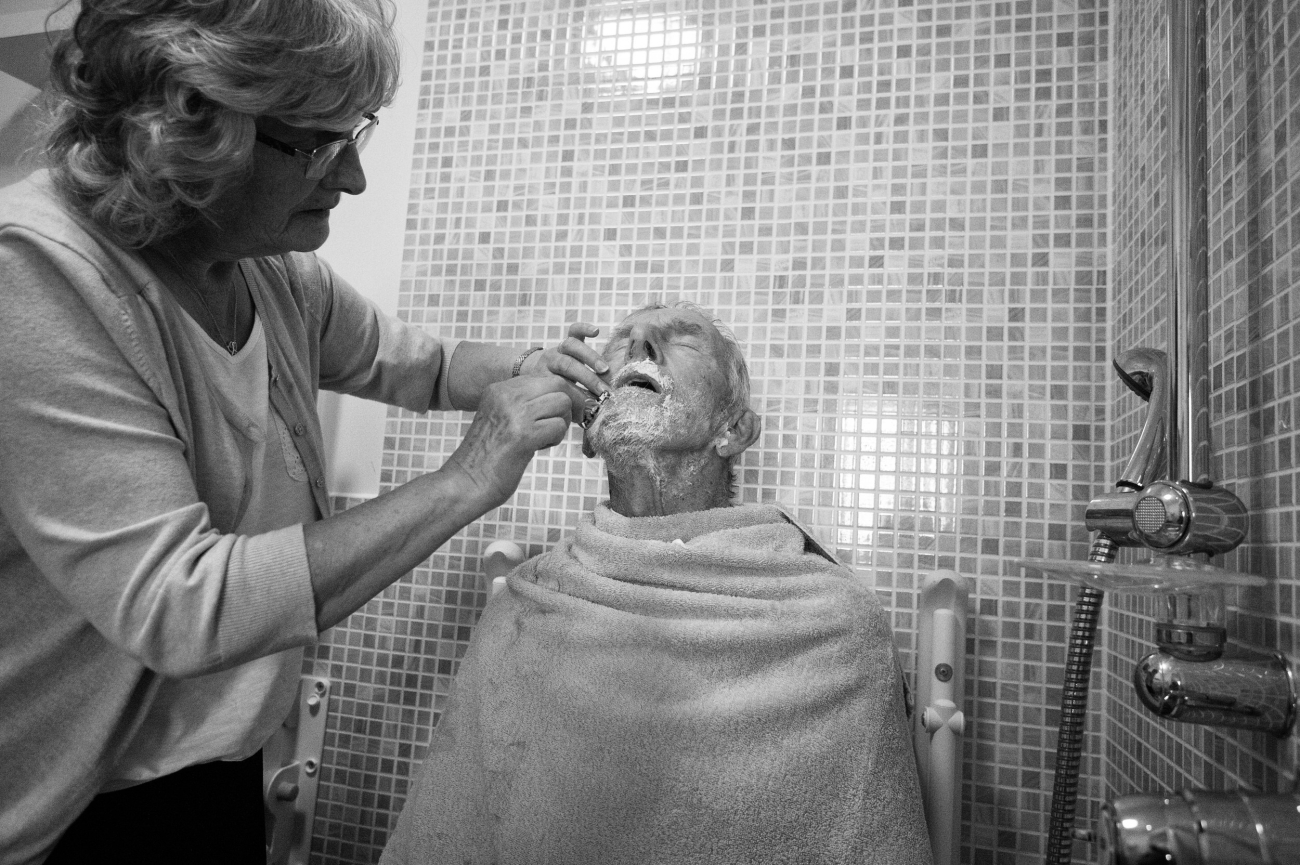
Here she is brushing his teeth for him. It was one of countless small acts of care that gradually became part of their daily life.
Dad had always been fiercely practical and independent, the man who could make, build or fix almost anything. Now he increasingly relied on Mum for even the most basic things.
She cared for him with extraordinary patience and tenderness, just as she had been beside him throughout their life together.

How did I forget
By this stage, Dad’s dementia had progressed to the point where he could no longer feed himself properly. He still knew he wanted to eat, but something as instinctive as bringing a spoonful of food to his mouth had become difficult.
Mum would sit beside him, cut up his food and help him eat. I remember watching Dad repeatedly lift the spoon and miss his mouth, while Mum quietly reached across to help him.
There is something about this photograph that I find particularly difficult. Dad had spent his whole life making things, fixing things and working with his hands. Now even this simplest of everyday actions was becoming beyond him.
It is one of the photographs in Ronnie’s Story that, for me, shows most clearly what dementia was gradually taking away.

I’m Still Here
As Dad’s dementia progressed, there were moments when it became increasingly difficult for him to communicate what he wanted to say.
But Dad was still there.
Behind the confusion and the fading memory was the same man we’d always known: the humour, the expressions, the occasional flash of recognition and that familiar twinkle in his eye.
Dementia was changing Dad, but it never completely defined who he was.

I Know What I’m Looking For
By this stage, Dad had been living in the care home for around eight months and his dementia had become very advanced.
He would sometimes spend hours down on the floor, carefully picking at tiny pieces of dust or anything else he could find. He seemed completely absorbed by it, as though he knew exactly what he was looking for.
I made this photograph only a few months before Dad passed. By then so much of the world as we understood it had disappeared for him, but whatever he was searching for on that floor made complete sense to Dad.

Always There for You
This was the last photograph I ever took of Dad, just a week before he died.
He had been in the care home for almost a year and by this stage was completely bedridden. Mum was still there beside him, as she had been throughout their life together, holding his hand and caring for him.
I had photographed their relationship throughout Dad’s dementia, from their moments together at home to Mum visiting him every few days after he moved into care.
And this is where my photographs of Dad end.
After a lifetime together, Mum was still there for him
Recognition from Magnum’s Former Head of Archives
Several months after Dad died, Ronnie’s Story began reaching a much wider audience. The photographs were being shared extensively online and had been published by the Mail Online when, completely unexpectedly, my phone rang.
It was John Easterby, former Head of Archives at Magnum Photos, a position he had held for nine years.
John had seen the photographs and contacted me personally. He told me:
“These are the best and most poignant images I have ever seen on this subject.”
Coming from someone who had spent so many years working with the archives of Magnum Photos and some of the world’s most important documentary photography, those words meant an enormous amount to me.
John felt very strongly that Ronnie’s Story deserved to become an exhibition. He told me that the photographs were incredibly powerful and that, if I could get them in front of the right people, they should be seen together as an installation rather than simply as individual images online.
At the time, I had no idea whether that would ever happen.
About a year later, I travelled down to Brighton to meet John, where we sat together over coffee and talked about the photographs and the project.
His encouragement stayed with me.
And eventually, the exhibition he believed should happen did happen.
In the months after Dad died, the dementia photography project began reaching a much wider audience as the photographs were shared and published online.
Memories from the Andipa Gallery
Twenty photographs from Ronnie’s Story were exhibited for a month at the Andipa Gallery in Knightsbridge, London, during World Alzheimer’s Month.
The Andipa Gallery exhibition brought the dementia photography project together as a complete body of work for the first time, with twenty photographs displayed in the gallery for a month.
Video highlights from the opening evening.. Music by Paul Lamb


Memories from the Andipa Gallery
Twenty photographs from Ronnie’s Story were exhibited for a month at the Andipa Gallery in Knightsbridge, London, during World Alzheimer’s Month.
Gallery owner Nicholas Andipa generously donated an entire floor of the gallery for the exhibition, giving us the opportunity to use Dad’s story to help raise awareness of dementia and its effect not only on those living with the condition, but also on the families who care for them.
The opening night was extraordinary. The gallery was packed with family, friends, photographers and artists who had come together to see the work and support the project.
The evening was catered by Philip Small Events, with live music from the great British blues harmonica player Paul Lamb. Fil Straughan also performed two Luther Vandross songs during the evening.
The harmonica had particular significance because Dad had played one throughout his life, and recordings of him playing are now among the few sounds we still have of him.
Later in the evening, toastmaster Graham Doorwood conducted an auction that included two gold-plated Dannecker harmonicas generously donated by harmonica maker Anthony Dannecker. Fil Straughan and Jeremy Price placed the winning bids and took the two instruments home.
The whole experience was probably one of the most surreal of my photographic life.
I remember arriving at the gallery and seeing works by Picasso, Chagall, Banksy and Damien Hirst being taken down, knowing that for the next month those walls would be filled with photographs of my mum and dad.
That was incredibly humbling.
What had begun as photographs made quietly within our family home had somehow travelled all the way to a gallery in Knightsbridge, where complete strangers would stand in front of them and perhaps recognise something of their own families and experiences.
I’ll always be enormously grateful to Nicholas Andipa for giving Ronnie’s Story the time, space and opportunity to be seen.
Memories from the Exhibition
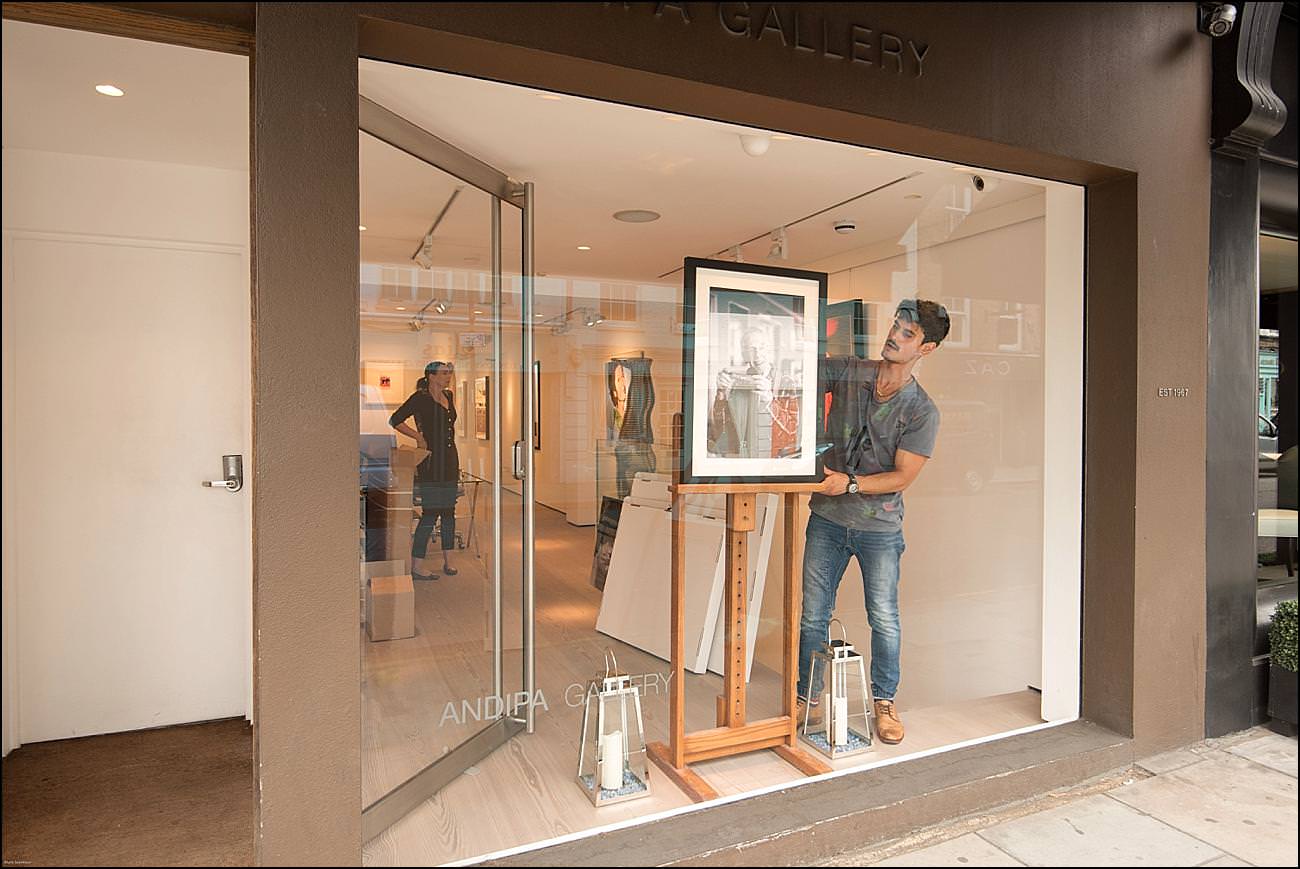


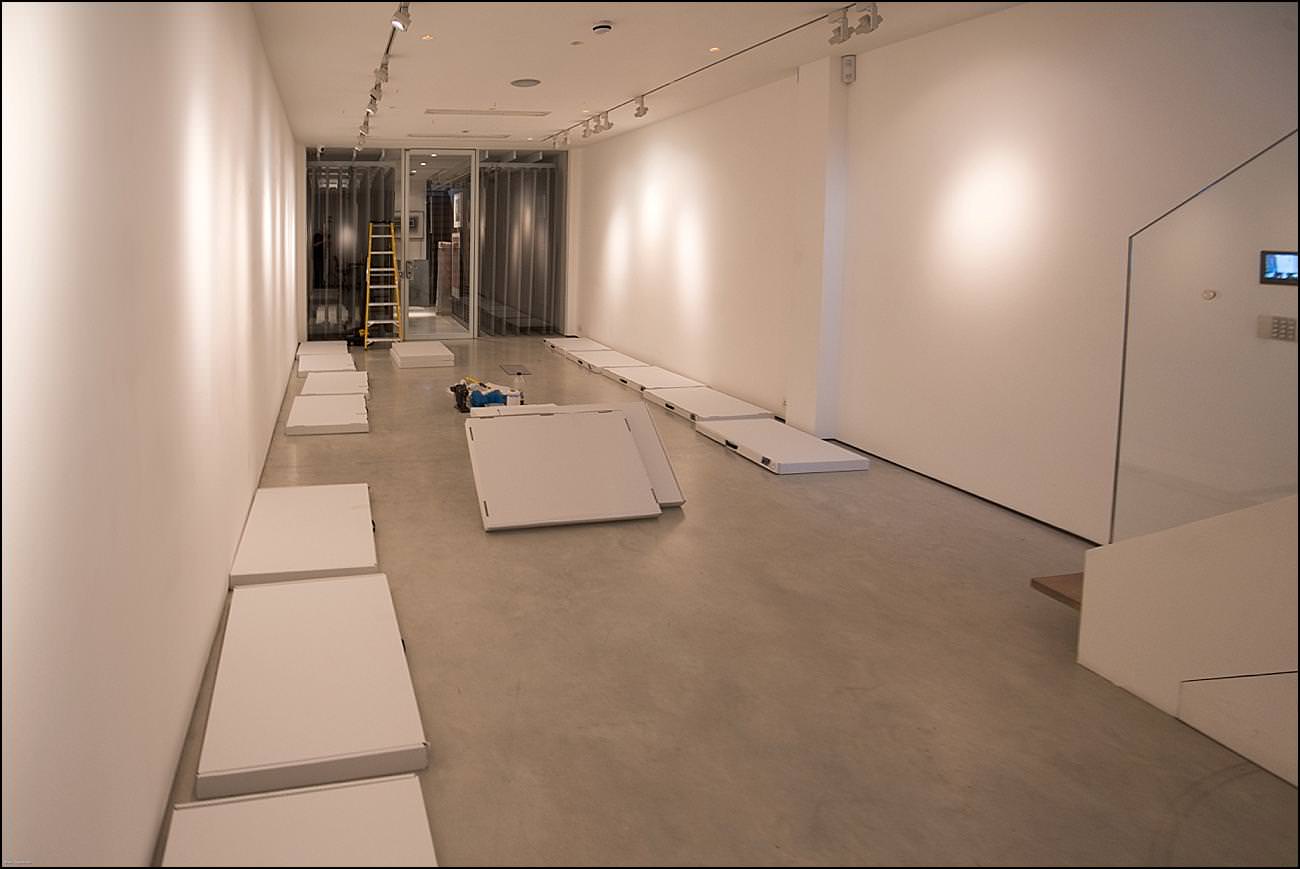
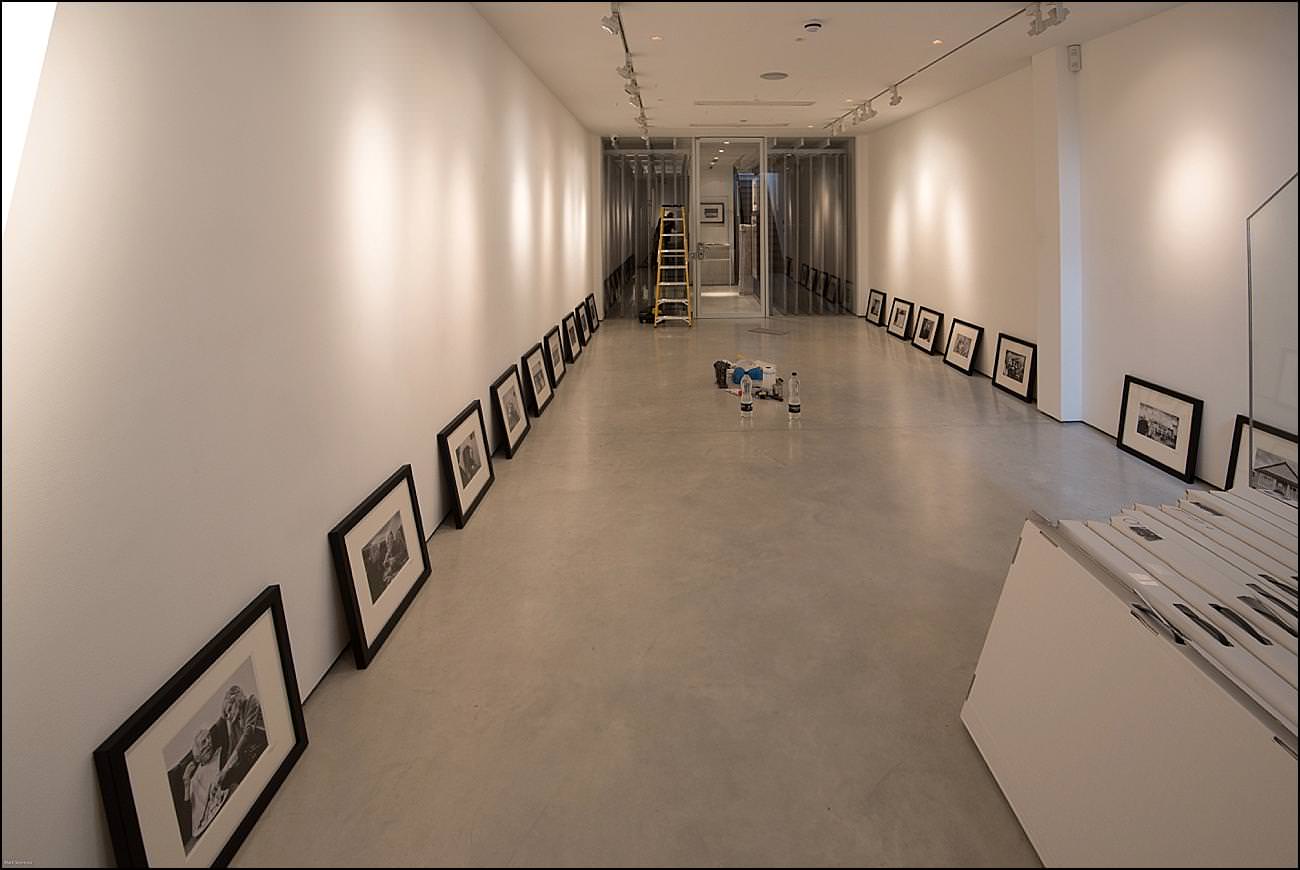


Setting Up the Exhibition
Before the doors opened, there was the strange experience of watching Ronnie’s Story take over the walls of the Andipa Gallery in Knightsbridge.
This short time-lapse captures the exhibition being installed, as twenty photographs documenting Dad’s journey with dementia were brought together as a complete body of work.
Seeing photographs that had begun as such a private record of our family life become a public exhibition was an extraordinary moment.
Images from the opening night


Images from the Opening Night
The opening night of Ronnie’s Story at the Andipa Gallery brought together family, friends, photographers, artists and supporters of the project. These photographs, taken by various people throughout the evening, give a sense of just how busy and emotional the night became.
One moment in particular has stayed with me.
Singer Phil Straughan performed Luther Vandross’s Dance with My Father and, as he sang, he danced with my mum. Given that the entire exhibition was about Dad and the life they had shared together, it was an incredibly emotional moment. There were very few dry eyes in the gallery, mine included.
Later in the evening, my good friend and toastmaster Graham Dorward conducted an auction to raise money and support the project.
Among the lots were two beautiful Dannecker harmonicas, generously donated by harmonica maker Tony Dannecker. The harmonicas had a particular resonance for us because Dad had played the instrument throughout his life, making them far more than simply objects to be auctioned.
The photographs below capture some of those moments and the extraordinary number of people who came together that evening to support Ronnie’s Story and help us raise awareness of dementia.
Ronnie’s Story in the Media
The response to Ronnie’s Story extended far beyond the exhibition itself. The photographs were shared widely online and featured across newspapers, magazines, television and photography publications, helping the project reach people around the world who had their own experiences of dementia.
As the dementia photography project reached a wider audience, Ronnie’s Story was featured by the BBC, Daily Mail, Huffington Post and other publications.
What surprised me most was how many people contacted me afterwards to share stories about their own parents, partners and families. Although the photographs were deeply personal to us, they seemed to reflect experiences that were familiar to many other families living with dementia.
Ronnie’s Story on Film
This film tells more of the story behind the photographs and the journey the project took after Dad’s death.
Articles and Features

See the interview on Sky TV News Channel
A short slide show #rememberme #dementiafriends ( WARNING.. this is very emotional ! )
Daily Mail article on Ronnies Story with over 3800 shares and 466 Comments !
BBC article on Living with Alzheimer’s: A harmonica for Ronnie
Custom Harmonicas by Danneker . A Harmonica for Ronnie
The Huffington Post, The Story Of What It’s Really Like To Love Someone With Dementia
A short film on Ronnies Story
A short documentary film by Neale James on Living with Dementia. Ronnies Story
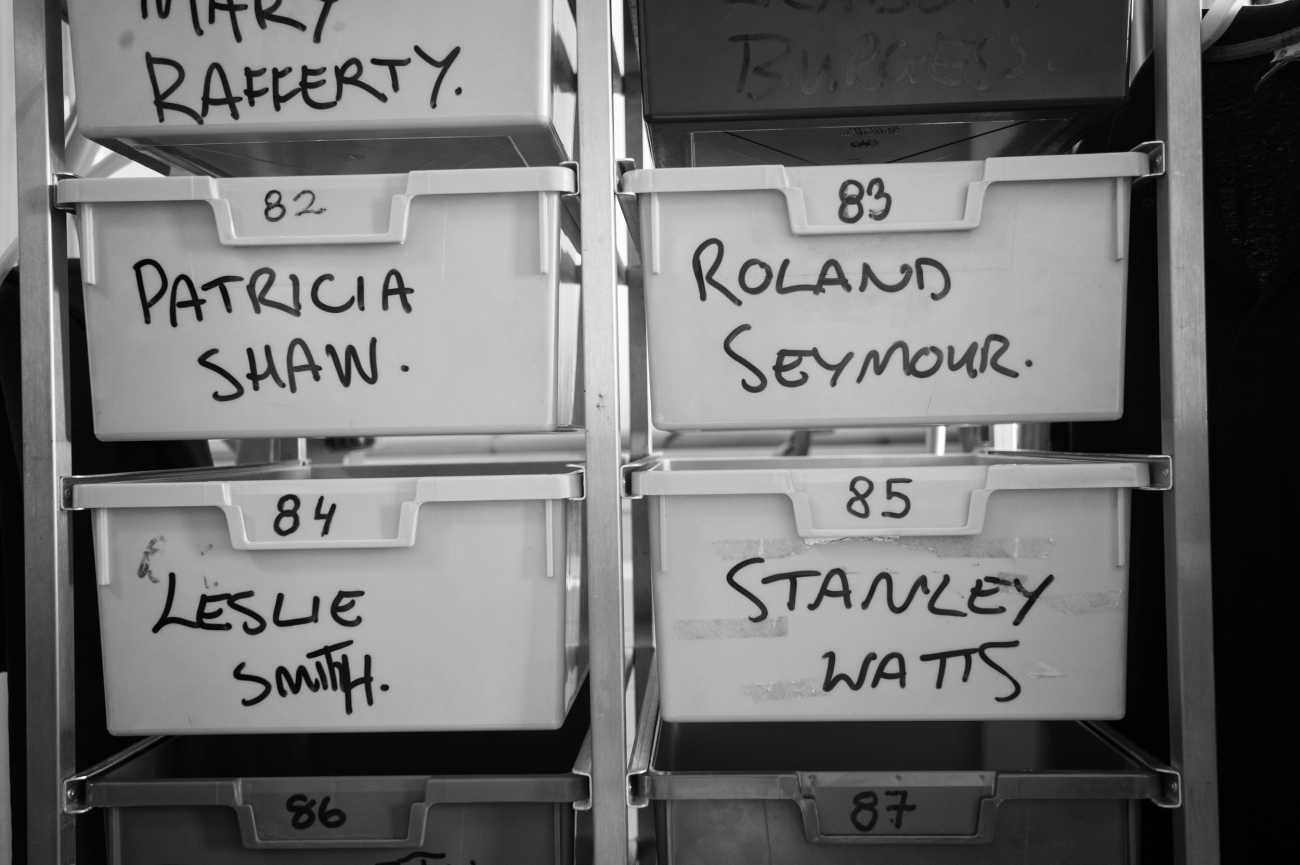
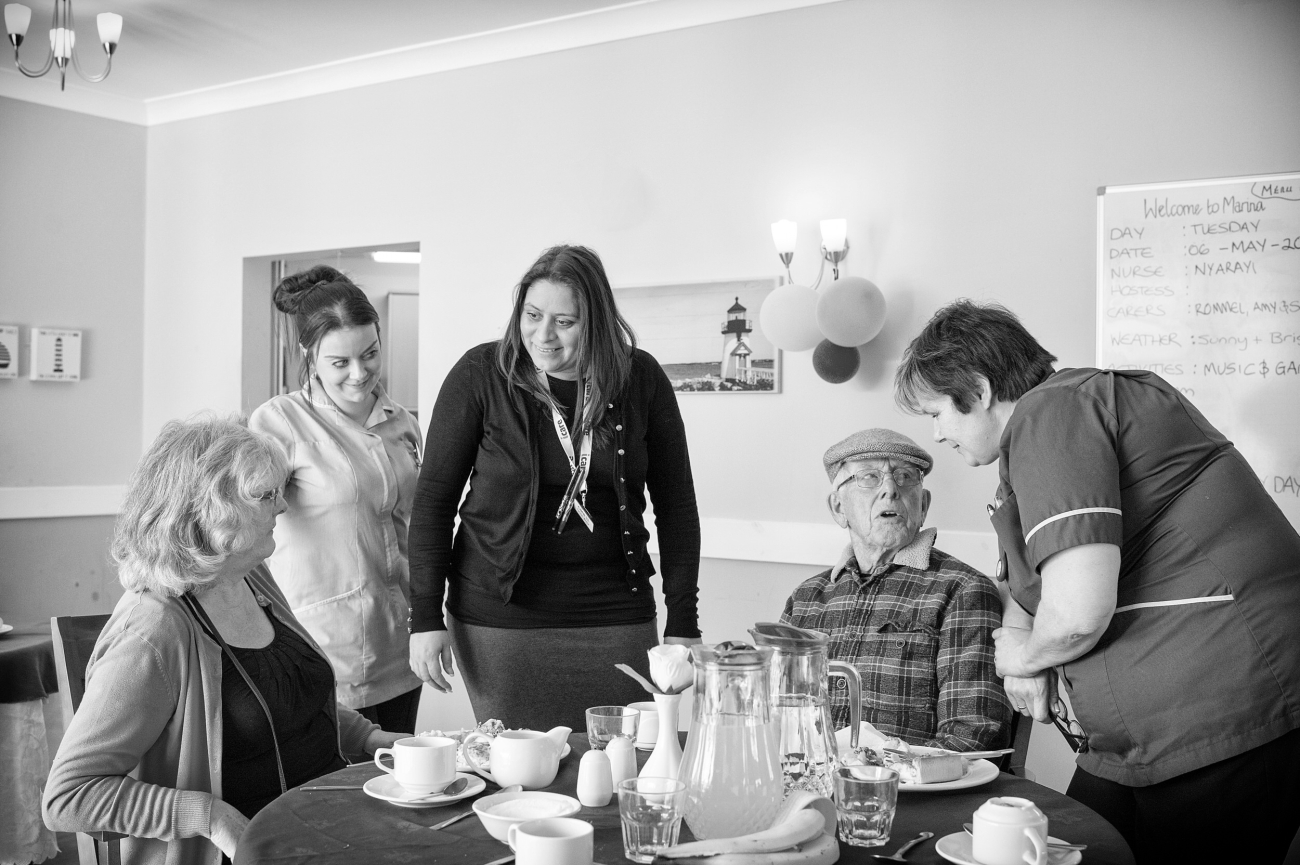
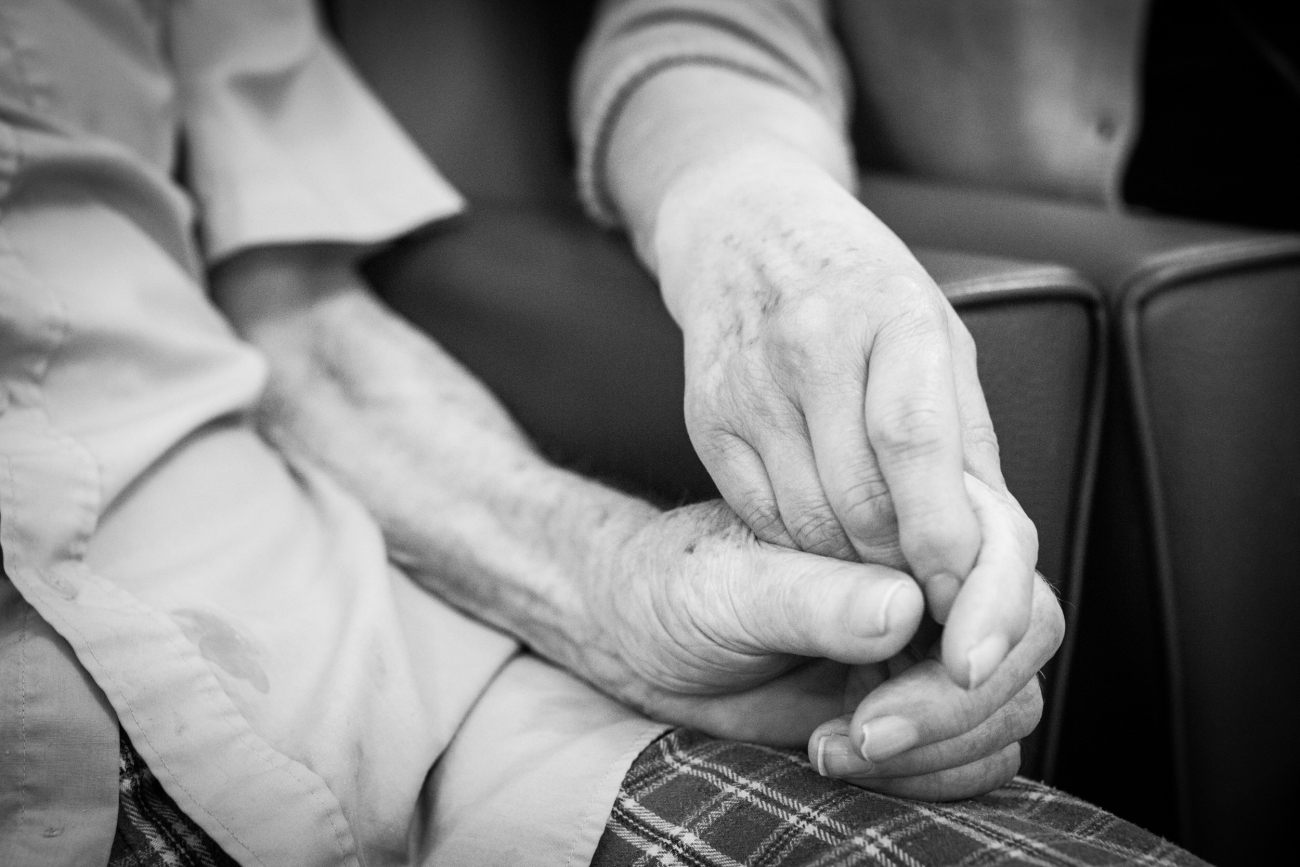
Out takes that didn’t make the final 20 but add to the story





EARLIER TIMES
The only sound we have of Ronnie
Looking back, this dementia photography project became one of the most personal and important bodies of work I have ever made.
Kind Comments
Beautiful and sensitive work Mark. Thanks for sharing.
Graham Warrellow
Very moving. The power of photography and the fabulous memories that it preserves.
Murray Carle
 Carol McLernon My husband’s family are going through this too My father in law 92 (who incidentally won the DFC during 2nd world war) is suffering from this disease and it’s terrible to watch such an intelligent and gifted gentleman turn into someone who now suffers this way
- Trudi JamesEditWhat a beautiful montage to your dad
- Alison Thorne Moved me to tears to Mark its beautifully done, I know exactly what you’ve all been going through as you know we went through exactly the same with Mum it’s the hardest thing, Auntie Winnie has done an amazing job in her care for him she is a very strong woman, thinking of you all x
- Jane Mote Terribly sad, such a beautiful tribute to a lovely man and devoted couple. Sending our love to all of you from Dave and Jane xx
- Harry Sharma Very touching Mark, beautiful photos & full of emotion.
- Judy Kanar, this slideshow is breathtaking in its poignancy. What you capture in each frame wouldn’t fit into a thousand words. I lived with this while watching my mom’s journey with Alzheimer’s, so can identify a little, and with all my heart, I wish you and your mom strength and love to manage this heartbreak and still find the beauty that’s hiding within.
- Martin Wills Its a great montage and it shows the love your family has for your dad.
- Sara James Dear mark. Thank you so much for this beautiful piece on your Dad. My sister and I are going through the very same thing with our Dad, and although it is hard to read it, i do hope that it raises more awareness about this awful disease, so that in the future, there is more that can be done. Sara
- Kirsty McHattie These photographs are incredible and so poignant. A real tribute to your father.
- Frankie Gardner Going through same thing with hubby right now. Terrible disease! Had to put him in frail care as I could not cope any more. He cannot walk, see, or feed himself most of the time
 Carol McLernon My husband’s family are going through this too My father in law 92 (who incidentally won the DFC during 2nd world war) is suffering from this disease and it’s terrible to watch such an intelligent and gifted gentleman turn into someone who now suffers this way
Thanks Mark I went on this journey with my own Father nearly a decade ago. These photos really resonated espcially the last photo in the series which is almost identical to a memory I have of my father the last time I saw him. Seeing the journey helped me to remember more than just that last painful image and remember him before the illness took him away.
Hello Mark,
I heard you on Nick Ferrari this morning.
Wonderful photographs of your dear father Ronnie. I was in a similar situation with my dad Dave.
Thank you for showing Ronnie, I’ll bet he was a hoot.
May God bless you, walk with you and keep you safe.
Warmest regards,
Paul
Hi Mark
I heard uvtslkingbto Nick this morning on LBC. I was brought up in 73 Royston way my sister is Melanie. Don’t think there’s much in our ages with u and yr bother. I havexsern ye mum over the last few yrs coz my 1st husband was David Burrows from Lawrence way where I still live today with my 2nd husband. I last saw yr mum at mary haskell funeral. David had dementia and was in a nursing home for 2yrs before he passed away. I did not no much about dementia untill david was diagnosed with it in his late 50s. He had lewy bodies which runs hand in hand with parkinsons which he had for 10yrs before that. I love the Ronnie’s story . It’s true what they say a picture and spk a thousand words. Say hello to yr mum for me.
Deborah ( nee Hughes )